Tuesday, September 04, 2012

A Man, A Plan, A Soldering Iron, Pt. 2: The Fuzzening

When last we checked in, I was yakking about my first few projects, which culminated in a buffer-the-tone-vampire-slayer pedal. With that pedal working like gangbusters, I tackled my next two projects: a CS-3 mod and a few Fuzz Faces, two of which would be Christmas gifts.

My Boss CS-3 compressor/sustainer was a gift from my buddy Mike Nix, who is, I should say, a hell of a guy. He knew I was down in the dumps and sent me the pedal to cheer me up. I'm saying now, in this public-ish forum, that I will build him something cool to say thanks.

Compressors, for those who may need a refresher, squeeze the sound to flatten the volume. An uncompressed guitarist can play quiet or loud based on how hard he or she hits the strings, but a guitarist playing through a compressor plays every note at the same volume. This produces a sharp and clean effect, one often used by country guitarists. A compressor also sustains each note by raising the volume on the note's usual decay, which can give the guitar a pleasant overdrive effect.

The general consensus on CS-3s is that they are the most inferior compressor that Boss has produced, but there was a wealth of information online to how to tighten up the sound. I made a workplan based on a number of sources:

Here's the technical side of what I replaced. Please feel free to skip this if you have no interest in pedal modification.

1. LED Mod: I switched out the LED and R35, which Sava had incorrectly listed as R33 somewhere. That was a little tight.

2. Wampler/Fat Body/Ovnilabs Mods. I switched out:
  • C1 (was a .027uF cap, is now a .22uF cap)
  • R5 (10k to 470 ohm)
  • R36 (10 k to 100 ohm)
  • R32 (220 ohm to jumper)
  • D10 (1N4148 to jumper)
  • C2 (.022 to .1uF)
  • C13 (.047 to 2uF [two 1uF caps wired in tandem, which is too big for the board, but barely fits, so there])
  • C4, C6, C14, and C17 (1uF to 1uF film cap).
These changes made the pedal sound much, much better. Highly recommended.

3. Ultimate Guitar Mods:
  • D2, D3, and D6 (didn't record what the diodes were, but I switched them for 1N34A)
  • C10 and C16 (.047uF to .1uF)
  • C9 (didn't record what it was, switched for .047uF
  • IC1 and IC2 (used a stacked board from Monte Allums to lift the dual stacked opamp daughter board over the main CS-3 board and switched the DIPs for a RC4558P and a BBOPA2134PA) 
I didn't hear much different from the capacitor changes. The diodes gave the sound a little more clipping. The major thing was the op-amps. The new ICs took the sound from great to AWESOME.

4.  Sava Mods:
  • C7 and C15 (.01uF to the same in metal film)
Heard no difference. If I were to do this again, I'd leave all the capacitor changes from the last two mods out. Here's an image of the board. Note Monte Allums's boards sticking up on the right side. One is folded partly down, but the other has room to stick straight up on the board. I added all the reddish brown caps and the jumpers, but I'm too lazy to figure out what else.


Here's how it looks. I painted an infinity symbol over the 3 in its title, but that's pretty silly in retrospect. Here's a video of someone playing a CS-3 with the Wampler/Full Body mod. Mine sounds sort of like this, but it pops more.


Feeling pretty good about the success of the CS-3 mod, I decided to tackle the traditional first pedal build of the nascent pedal hacker: the venerable Fuzz Face. One of the earliest guitar pedals, the Fuzz Face uses positive ground germanium transistors to distort the heck out of the sound. Discerning fans will recognize this as the key component of Jimi Hendrix's tone. Here's a demo:


After some discussion with my wife, I decided that a household with two curious kids was no place to keep the kind of chemicals I would need to make my own PCBs. Probably a good idea for the time being. This time I bought materials from two of the best vendors out there:

  • Mad Beans Pedals: Brian at Mad Beans makes some of the best available PCBs for hobbyists. As I intend to document, I've bought from him pretty much every time I've built a pedal. I bought Mangler boards from him. 
  • Small Bear Electronics: Steve at Small Bear was one of the first online hobby shops to provide high-quality components for pedal builders. He offers parts that no one else can touch. I bought enclosures and components from him, especially the germanium transistors I needed.

I decided to build three. One for me, one for my brother-in-law Jeff, and one for my pal Matt. The transistors at the heart of the pedals must be paired together, one with a high output within certain restrictions and one with a low output. Also, since these are vintage components that have hardly any uses outside of pedal building, they are quite scarce. I intended to buy three pairs of tested and paired transistors from Small Bear, but he wrote me that his stock was too depleted for that. Instead I wound up buying one set of paired transistors and about ten untested and unpaired ones. Using information from a handful of websites (this one was the best), I learned how to test these transistors and pair them myself.

I also decided to add a dying battery simulator directly into the pedal using the crystal-clear instructions from Dano of Beavis Audio Research, which is, flat-out, one of the best damn sites out there for pedal hobbyists. Dano, if you ever read this: thanks, man. You are the best.

So I populated the board and drilled out the enclosures. As the photo on the right shows, I used Hammond 1590BB enclosures and drilled them out with the idea of putting the footswitch on the right and an extra potentiometer, which I'll always call a pot from now on, on the left. I used MXR-style knobs and put a rubber MXR-style foot control on the dying battery pot. Here's what they looked like with the knobs attached before being painted.

And here's what they look like when painted. Matt got the red one and Jeff got the yellow one. The green one lives on my pedalboard. When I want Stooges tone, that's where I go.

Next time: The Rat and how to fuck it up.

Sunday, August 26, 2012

Music Library Catch Up: Aesop Rock, Afrirampo, Alabama Shakes, Alice Cooper, Alice Donut, Animal Collective, Ass Ponys, Atlas Sound, Avey Tare, Aye-Ayes, Albert Ayler


I have a lot of albums that I've missed out of my regular music library coverage over time. Here's a few.

Aesop Rock - Float (2000). I've written about Aesop Rock a few times over the course of this project: here, here, and here. And yet I've never said anything of substance about his work. I'm a lousy writer about hip-hop, so maybe that's for the best. This is a great album, though.

Afrirampo - WE ARE UCHU NO KO (2010). Psychedelic in a uniquely Japanese way! Two ladies singing, shouting, harmonizing, and screaming, all while kicking out some truly amazing tribal-meets-crazy-noise-meets-heavy-stoner guitar and drum mojo. Fantastic.

Alabama Shakes - Alabama Shakes EP (2011). Nothing new under the sun, as you've probably heard from the infinite number of stories about this young band, but they mine Janis Joplin in a fun way.

Alice Cooper - Mascara And Monsters: The Best Of Alice Cooper (1971-1989). I don't need much Alice Cooper in my life, but a little bit, which nicely coincides with the first half of this collection, is just great.

Alice Donut - Mule (1990). I've had a bunch of vinyl from this band over time, but this is my first digital copy of one of their albums. Great stuff, even if it is very similar to the Butthole Surfers.

Animal Collective - Honeycomb/Gotham (2012). Good lord, have I written about this guys a lot. This is the new one, and I still like them less with each new release. Here, here, here, here, here, and, comprehensively, here.

Ass Ponys - Electric Rock Music (1994). The only other thing I have by these guys is a mix from a friend, which I like a lot. I have yet to explore them as much as I'd like, but this is a good start. Excellent album.

Atlas Sound - Orange Ohms Glow EP (2008). More trippy soundscapes from Bradford Cox. I wrote about another Atlas Sound album very briefly more than four freakin' years ago. Has this project eaten my life? Maybe.

Avey Tare - Down There (2010). I actually like this better than the recent Animal Collective albums. And the previous Avey Tare albums, which I review here. 

Aye-Ayes - It's Immediate (2011). Whereas the previous Aye-Ayes album had the feel of 80s college radio, this one is more like 80s commercial radio, which is much less my thing. Sorry, guys. It's good for what it is, and I think that people younger than me who didn't live through 80s radio may enjoy it more.

Albert Ayler - Holy Ghost (1962-1971). This box set is the greatest thing since the invention of, well, ubiquitous food stuffs. Ayler live and burning down the house over and over again. He sought transcendence and found it in pretty much every song. Covered previously here, here, here, and here.

Saturday, August 25, 2012

A Man, A Plan, A Soldering Iron, Part I: The Why


I am a guitarist of the indie-rock/anything-goes school. Although I’ve been playing for 27 years, I’m pretty much resigned to maxing out as an okayish player, which may even be a generous self-assessment. Despite my limitations, playing music and being a part of bands have been an important part of my life and I don’t really want to quit just because I’m, y’know, old and busy with other things and not that great of a musician. In recent years, I’ve become more interested in tone, which is an aspect of music that comes with a price tag attached.

For most of the time I’ve played electric music, I’ve played fairly clean. Guitar, cord, amp. No pedals. I spent money on the best guitar and amp I could get at the time, and if I had any other cash, I spent it on different instruments. I’ve lacked confidence – justifiably – in my guitar playing, and through most of my 20s, I played bass, mandolin, a smattering of other instruments, and only occasionally guitar in bands. In my 30s I started taking the guitar more seriously, mostly under the influence of my friend Matt, who is a very good guitarist. Matt encouraged me to invest in a few pedals for added grit and to think about my tone. Recently I’ve gone far past the tasteful few pedals that Matt surely meant.

So, first off, I play through a vintage 1965 Princeton Reverb. I’ve replaced the speaker twice, once with a Weber 10” alnico and, more recently, with a Weber 12” alnico. I have held onto a number of guitars that show off my financial limitations: a Tokai Strat copy, a Tokai Telecaster copy, an Epiphone Sheraton that I modded into a Casino with some mini-P-90s, and, within the last three months, a J. Mascis Squier Jazzmaster, which is now my main axe. All of which is to say that I have decent enough equipment. The Princeton breaks up beautifully when overdriven (starting at about 5 on the volume knob) and has top-notch chorus and reverb settings built into it. My guitar has excellent tone, and as long as I'm happy with the straight guitar to amp sound that I have, everything is fine. But I'm not satisfied with a single sound.

Last summer I had some severe medical problems that damaged my right leg, and I've been a lot less active since. I was also unemployed for about 18 months that included all of 2011. Towards the end of the year, with too much time on my hands and not a lot of money, I decided that I was try my hand at modifying my meager guitar pedals.

The pedals I'd been carrying around for years were a Catalinbread Chile Picoso clean boost, a Danelectro (Dano from here on out) Daddy-O (which is pretty much the same thing as a Marshall Guv'ner overdrive), a beat-up MXR Distortion + from the 70s, a Dano Rocky Road rotating speaker simulator, all of which were offset from the main line by a Loooper loop pedal, and a Boomerang 2 phrase sampler. Here's a post from 2005 that included my brief flirtation with running the phrase sampler through a cheap-o Sunn 0))) 112. I believed that the Catalinbread was true-bypass (meaning that my signal was unaffected by the electronics inside the pedal when it was off), and the other pedals were branched off of my main line by the Loooper until I wanted them, so I had a pretty clean line, or so I thought, from guitar to amp. But I'm getting ahead of myself.

The first modification ("mod," from here on) was to the Rocky Road pedal, and I did this back in 2003 or 2004. Those pedals came with a gain issue, so they were super-loud when switched on. Danos are not true-bypass pedals, meaning that they always affect your signal, which is why I had it on one of the Loooper loops, but the gain issue made it an unusable pedal. However, with a quick jumper between two pads, I had a fine, cheap, although unbypassed pedal.

The second modification: So when I decided to start messing around with pedal mods last September, I started with my other Dano, which was sounding duller and duller over the years. I bought a kit from Monte Allums, the Tri-Gain TNT mod. The Dano now sounds much better than it did, although I never use it anymore for other reasons, mainly because it, too, is unbypassed. Just writing about this makes me realize that it is probably time to learn how to bypass a Dano pedal. Anyway, I took no pictures of either of these modifications, but here's someone else's modded Dano. Mine looks much the same.

buffer board
The third, fourth, and fifth projects were in mid October of last year. After reading about the importance of buffering a long pedal chain, I bought a pre-printed buffer board from General Guitar Gadgets (on the left) and a bunch of components from Pedal Parts Plus. With the board I built my first handmade pedal, a buffer, which is shown at right. I let my kids decorate it with me. It has an utterly superfluous 3PDT true-bypass switch, which it doesn't need because it is an always-on pedal. At the same time, I pulled out the old legacy switch from my MXR Distortion + and replaced it with a 3PDT switch for true-bypass. I also added in jumpers around the input resistors in my Boomerang because it had gotten quite hissy over time.

I built a pedalboard out of an old suitcase around the same time, so my pedal rig as of October 18, 2011 looked like the following picture. Note that I had added a few other pedals over time: a Boss CS-3 compressor/sustainer, a Barber Direct Drive overdrive pedal, an Electro-Harmonix Memory Boy analogy delay pedal, and an ultra-shitty autowah that came with a bass I bought from Eastwood Guitars.

This is where I'll leave my story today. Next time: I mod out the CS-3 and build three Fuzz Faces!

Friday, August 17, 2012

The Shrill Egoism of a Crying Baby


I keep starting this post over. For months now, I’ve tried to come up with a way to describe why I’ve been unable to write lately, but the problem itself keeps me from describing it. Part of it is that I’ve started a new job where the need to dissociate my working life from my creative one has led me to go by my first name for the first time in my entire life. I’m 40 years old, so Iconsider the fact that I usually answer to this new name and most variants thereof to be a victory of sorts. There’s something appealingly metaphorical about having different names for different parts of my life, although I’m afraid that I’m also setting myself up for a schizophrenic break in the next few years where my working-name me eventually assumes an entirely different identity while my creative-name me tries to suss out why his bank account is evaporating. Soon to be a major motion picture from Charlie Kaufman! Anyway, I did not account for the fact that I would make friends at work who I want in my private, and somehow more real, life. In retrospect, this should have been obvious.

The point here, though, is that I’m engulfed in an identity crisis. My mind keeps turning back to Wittgenstein’s exhortation, “whereof one cannot speak, thereof one must remain silent.” There are two problems with this: he himself broke that dictum and he didn’t mean it this way. And yet these words have taken up lodging in my head, like a quicksilver robot made of NO, telling me that I’m out of ideas, the muse is gone, the point of view that I honed over my thinking years has snapped off, with all of the related implications of mental castration. I’m split in two. I’m Rumpelstiltskin. I’m gone.

Except, of course, that I’m still here. After nearly dying last year, this should be more of an everyday miracle, but it’s the kind of miracle that oxidizes on the unruly part of your lawn and you find yourself feeling guilty for never polishing it before the weeds take over. That’s the surgery that saved me. That vine-covered lump over there, hidden by trees. You should have seen how it gleamed back when I couldn’t stop staring at it. Back then, I kept thinking about what if I had died. What would I leave? This is meandering and now soppy bullshit. Sorry.

This gets to my problem. When I try to write anything for myself, it seems meandering and soppy and thereof I should remain silent. I keep starting this post over because writing this narcissistic crap is good for no one, not even me. Hey, everyone: I’m sad and old and out of touch. And fat. I’m confused and I’m not feeling a lot of the pop culture that used to fuel me. Isn’t that interesting? Let me help: No. No, it’s not. So why am I even writing this? I don’t know. Maybe just because I feel bad about not even maintaining my meager little blog. So there you go.

I sincerely hope that no one made it through all this self-pitying crap. I probably would delete this, too, except that if I picked up one thing from last night’s Louie (where he flees in panic when confronted with his father), it’s that I should just go ahead and get through the agony because nothing’s really chasing me and there’s really nowhere to run.

If anyone still cares, I’m continuing my listening project, although I’ve been unable to write about music except in short bursts for the last, what, two years? Maybe by putting this up, I can stop feeling bad about not doing anything and move forward on that. I also started to build guitar pedals last year, so I’m thinking about writing about that instead of any more of these pathetic attempts at introspection. I’m not really working for the large online pop culture magazine associated with the Onion at the moment, mostly because I don’t have the time, although I hope to change this in the near future.

Friday, May 18, 2012

Music Library: Otis Rush, Otis Taylor, OutKast, Overkill L.A., Owen Pallett, Buck Owens, Ozzy Osbourne


Otis Rush – “Double Trouble” (1958). Excellent and ominous blues.


Otis Taylor – White African (2001). Bluegrassy folk blues that has quite a bit of heart for blues made in the double-oughts.


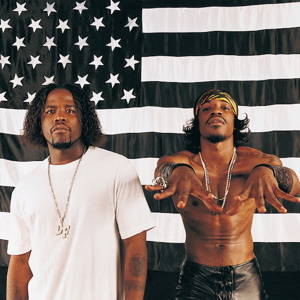
Outkast – Southernplayalisticadillacmuzik (1994), ATLiens (1996), Aquemini (1998), Stankonia (2000), Speakerboxxx/The Love Below (2003). The progression from chicken-fried funk to psychedelia to the unbridled pop of the 2003 double album makes for a great afternoon of listening. What happened to these guys?


Overkill L.A. – Triumph of the Will (1985). SST put out some excellent metal with St. Vitus, but this is just turgid and dull.
Owen Pallett – Lewis Takes Off His Shirt EP (2010). Since retiring the Final Fantasy name, Pallett has put out an album that I hear is pretty great, but sadly, I have yet to pick it up. This EP, which mostly consists of remixes of the title cut, is only so-so.
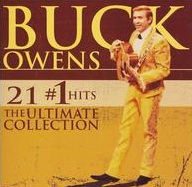
Buck Owens – 21 #1 Hits: The Ultimate Collection (1963-1988). I picked up this at a bargain-basement price after I covered Owens a million years ago. This has most of his hits from the 60s in their original form, but substitutes a 1988 duet with Dwight Yoakam for the original “Streets of Bakersfield,” an astonishingly short-sighted attempt to rope in new fans who would be in their 40s or 50s now.
Ozzy Osbourne – Blizzard Of Ozz (1980) and Diary Of A Madman (1981). I’m awfully fond of these albums, although they are nothing but buttery cheese. I love Sabbath’s doom and gloom, but Ozzy on his own is not that far from David Lee Roth’s sense of schmaltz and showmanship.

And that's it for the Os. More coming soon.

Music Library: Oscar Peterson, Osvaldo Golijov, Otis Redding


Oscar Peterson – The Jazz Soul Of Oscar Peterson (1959) and Night Train (1962). Peterson’s piano graces many of my jazz albums, but these are the only two I have with his name on the cover. Both are excellent, although I don’t find either to be quite as transcendent as the best of the best. This is almost definitely a failing on my part, not Peterson's.


Osvaldo Golijov – Oceana (with the Atlanta Symphony Orchestra, Kronos Quartet, and Dawn Upshaw, 2007). Like jazz, modern compositional music, especially opera, is another place where I lack a decent vocabulary. This is lovely, powerful music, though, although I like the instrumental Kronos Quartet piece “Tenebrae” best.


Otis Redding – Pain In My Heart (1964), The Great Otis Redding Sings Soul Ballads (1965), Otis Blue: Otis Redding Sings Soul (1965), The Soul Album (1966), The Dictionary Of Soul (1966), King And Queen (with Carla Thomas, 1967), Otis Redding At Monterey Pop (1967), The Dock Of The Bay (1968), The Immortal Otis Redding (1968), Love Man (1969), Tell The Truth (1970), The Otis Redding Story (released 1989). There is a reason that this man receives such reverence from R&B fans. It doesn’t hurt that he has Booker T. & The MGs backing him up (and a quick RIP to Donald Duck Dunn), but Otis Redding pours himself into these songs like whiskey into an old-fashioned. My favorite single is “Knock On Wood,” because I’m helpless before the building horns on the intro, but there’s no way to say that this one will still be my favorite in five minutes. They’re all as sweet and tangy as the best old-fashioned anyone ever made.


Music Library: Orthrelm, Os Brazões, Os Lobos, Os Mutantes


There are two parts to my listening project: (a) listening to everything in my iTunes library and (b) writing about it. There may be a third part: (c) deleting the things I dislike, but I have rarely taken that step. I write about it here, and while my last update was six months ago, but I have kept up the other side, the actual listening. Since we left off with Ornette Coleman, I plan to finish the Os and then do a little catch-up with albums that I either purchased after the point where I would have regularly reviewed them or just flat-out missed for some reason. Anyway, without any further ado, I’m going to try to update this thing more regularly.

Orthrelm – Iorxhscimtor (2001) and OV (2005). To my mind, this is approximately the same sort of skronk-metal that Hella plays, although friends more immersed in the two bands tell me that they are quite different in purpose and ambition. I forget exactly how, and the music itself offers no clues. The upshot: this is great stuff for clearing a room or befuddling your own mind, with millions of guitar notes matching the millions of beats per second in the tempo. Fast, loud, annoying, and somewhat dangerous.


Os Brazões - Os Brazões (1969). Trippy garage tropicalia with heavy fuzz.


Os Lobos – Os Lobos (1971). Poppier but less effective (because it is far more polite) tropicalia. No heavy fuzz.


Os Mutantes – Os Mutantes (1968), Mutantes (1969), A Divina Comedia Ou Ando Meio Desligado (1970), Jardim Eletrico (1971), Haih Or Amortecedor (2009), Everything Is Possible: The Best Of Os Mutantes (1968-1972). One of the most incredible things about tropicalia is how it takes the very familiar, in this case the psychedelic sides of The Beatles and the Beach Boys along with a smattering of Nugget-era garage rock, and turns it into something half-alien. It is easy to dismiss something that is utterly alien; without a roadmap, people have been dismissing and/or destroying unfamiliar culture since prehistoric times. The half-familiar/half-alien, though, is intriguing. Where Os Mutantes is concerned, they are at their best when the music sounds familiar enough to rope the listener in, but full of unexpected and delightful weirdness. The first three albums are all full of sudden left turns that the kids in Mutantes built from a combination of the indigenous music of Brazil and their own art-damaged big-city ideals. The first two, actually, are the best of the lot, leaping from fuzz-driven garage rock to chamber-pop to polyrhythmic chanting, sometimes in the same three-minute rock song. The third album is a more ambitious concept album (I think), but it also delivers with some of the most brilliantly bizarre Mutantes tracks. Jardim Eletrico, unfortunately, is trying hard to be both weird and poppy, and it only succeeds on a track or two. The best parts of that album appear on the well-named compilation Everything Is Possible, which also collects some of the greatest tracks of the first three and a middling track from a later album. Haih Or Amortecedor was hailed as a triumphant return for the band, but to my ears, it lacks the effortless fun of the first three albums without dropping to the lows of the fourth. It sounds like the work of an older, less spontaneous band, and while it is not exactly calculated, it doesn’t inspire.


Wednesday, January 11, 2012

Best of 2011 (and best of 2006 report card)

As recent as two years ago, back before I entered into this state of constant tedium and tension that is defined by my lack of employment, I used to enjoy making a list of my favorite albums and other artworks at the end of the year. I also used to spend more time working on this blog because, strangely, having less free time meant that I could manage it better. Now, every post that I write here is time that I should be spending doing things that seem more valuable: looking for a job, managing the house, watching my children, planning dinner, looking for a job, contemplating the pointlessness of my existence, pitching stories to outlets that may indeed pay me for said work, staring into space, and looking for a job. But I digress.

What I'm trying to say is that even though I have become a remarkably inessential human being, I still have opinions. Why anyone would care about those is beyond me, but if you've read this far, you're probably wondering when I'm going to cut to the chase or, more likely, whether you'll have the fortitude to reach the end of this sentence before bailing. For those of you still here, this is what I'm going to do: list my favorite albums of 2011. Then I will tell you about my favorite albums of five years previous and how it chalks up to the list I posted at the time.

My Favorite Albums of 2011:

1. Fucked Up - David Comes To Life

2. PJ Harvey - Let England Shake
3. Thee Oh Sees - Castlemania
4. The Alabama Shakes - Alabama Shakes EP
5. Girls - Father, Son, Holy Ghost
6. Earth - Angels Of Darkness, Demons Of Light
7. Mastodon - The Hunter
8. Mike Watt - Hyphenated-Man
9. Kurt Vile - Smoke Ring For My Halo
10. Tom Waits - Bad As Me

Honorable Mentions (alphabetically):

Boris - Attention Please, Heavy Rocks (2011), and New Album
Sally Crewe - Transmit/Receive EP
Deerhoof - Deerhoof Vs. Evil
The Fall - Ersatz GB
The Feelies - Here Before
Jens Lekman - An Argument With Myself
J. Mascis - Several Shades Of Why
Melvins - Sugar Daddy Live
My Education - Sound Mass
Thee Oh Sees - Carrion Crawler/The Dream
Wilco - The Whole Love
Wild Flag - Wild Flag

Yuck - Yuck
----

My best albums of 2006, as reported in The High Hat.

  1. Joanna Newsom, Ys.
  2. Yo La Tengo, I Am Not Afraid of You and I Will Beat Your Ass.
  3. Mastodon, Blood Mountain.
  4. Cat Power, The Greatest.
  5. The Decemberists, The Crane Wife.
  6. The Fiery Furnaces, Bitter Tea.
  7. Mission of Burma, The Obliterati.
  8. Belle & Sebastian, The Life Pursuit.
  9. Isis & Aereogramme, In the Fishtank 14.
  10. Boris, Pink (came out in 2005, but had wide release in 2006)
  11. The Pipettes, We Are the Pipettes.
  12. Bert Jansch, The Black Swan.
  13. Destroyer, Destroyer's Rubies.
  14. Ratatat, Classics.
  15. M. Ward, Post-War.
  16. Brightblack Morning Light, Brightblack Morning Light.
  17. Six Organs of Admittance, Sun Awakens.
  18. The Hold Steady, Boys & Girls in America.
  19. Akron/Family, Meek Warrior.
  20. Scott Walker, The Drift.
Here's my favorite albums of 2006 now:

1. Boris - Pink (up from #10!)
2. Fucked Up - Hidden World
3. Comets On Fire - Avatar
4. Mastodon - Blood Mountain
5. Espers - Espers II
6. Sparklehorse - Dreamt For Light Years In The Belly Of A Mountain
7. Danielson - Ships
8. Scott Walker - The Drift (up from #20!)
9. Yo La Tengo - I Am Not Afraid Of You And I Will Beat Your Ass (down from #2!)
10. TV On The Radio - Return To Cookie Mountain

Honorable Mentions (alphabetically):

Destroyer - Destroyer's Rubies
Bob Dylan - Modern Times
Fiery Furnaces - Bitter Tea (down from #6!)
Ghostface Killah - Fishscale
The Hold Steady - Boys & Girls In America
Isis - In The Absence Of Truth
Mission of Burma - The Obliterati (down from #7!)
Nina Nastasia - On Leaving
Joanna Newsom - Ys. (down from #1!)
Jay Reatard - Blood Visions

In short, the things I loved then are not the same albums I love now, although there's still some crossover. Many of my favorite albums of the year were ones I did not hear until later. But, man, what a good year for music!

My photo
Cary, NC, United States
reachable at firstname lastname (all run together) at gmail dot com

About This Blog

From Here To Obscurity, founded ca. 2003, population 1. The management wishes to emphasize that no promises vis-a-vis your entertainment have been guaranteed and for all intents and purposes, intimations of enlightenment fall under the legal definition of entertainment. No refunds shall be given nor will requests be honored. Although some may ask, we have no intention of beginning again.

  © Blogger templates Brooklyn by Ourblogtemplates.com 2008

Back to TOP