Wednesday, May 20, 2009

New Albums Of Note!

Yesterday was my birthday! My b-day swag included some excellent new albums.


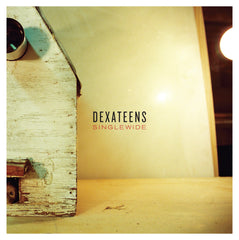
The Dexateens have just released their 5th album Singlewide. This one is a bit quieter and more reflective than their previous efforts, but it also features some of their strongest songwriting yet. On these tracks, The Dexateens invoke the particular melancholy of the South without dipping into condescension or nostalgia, and they manage to bring these songs alive with a folk-tinged rock that has one foot in the pure guitar pop of Big Star and the other in the rootsy sophistication of The Band. Longtime readers of this blog (not that there should there be any) may remember that I have a personal connection to the Dexateens, in that lead guitarist/songwriter John Smith and I used to play in a band together prior to him forming the Dexateens with Eliot McPherson in 1998. Most of the prior Dexateens albums featured a song that he'd written for that band, back in the mid-90s. This one doesn't, and I have to say that I'm glad he and Eliot are turning out new songs that are as good or even better than those older ones because, honestly, it makes me feel a bit less like a Pete Best. That feeling has never been fair to them - not only was I never in the Dexateens, but I'm proud of their success and happy for them personally, and, moreover, I have no claim on those songs - but when I hear the Dexateens' (far superior) versions of those songs that I used to play with John (and Mike and Jeff), I got a sense of how special our band was, back in the day, and I'm struck with how dusty and aged all my rock dreams became. And see, here's the thing: they deserve all the credit they're due. They're better without me. But it's been hard in the past for me to get my ego clear so I could appreciate their work for what it is. But this album gives me that necessary distance. It's nostalgia-free for me, and I still love it as much or even more than their prior ones.

More swag: Darcy James Argue's Secret Society has just put out their first album Infernal Machines. The Secret Society is an 18-piece big band assembled by Mr. Argue to play his compositions, although he himself conducts without contributing instrumentation. The music is delightful, seven compositions that have elements of Gil Evans, Tortoise, and Ellington (at least to these ears), without any overriding debt to any single source. The largeness of the band is matched by Argue's tasteful compositions and arrangement, giving the songs some real dynamic. And while the music is definitely somewhere between modern compositional work, jazz, and post-rock, the overall effect is highly emotional and beautiful. Because this is my blog, I'll point out that I have a personal connection here, too. Argue is an acquaintance. We used to frequent the same message board, and I even had a meal when visiting Boston back in 2002 with him and two other acquaintances with whom I've mostly lost contact. So I know that he's a super-cool guy in person, too, which makes it that much easier to wish him all the success in the world.
Other swag was Mastodon's excellent Crack The Skye, the new Akron/Family album Set 'Em Wild, Set 'Em Free, and a piano at which I've been learning to butcher "Bemsha Swing," thanks to my darling wife, who is the sweetest, coolest, and most awe-inspiring human being I have had the pleasure of knowing. I'm a lucky guy.

Tuesday, May 19, 2009

Music Library: Chris Brokaw, Chris Knox, Chris Morris, Chris Stamey with Yo La Tengo

Chris Brokaw - Red Cities and I Was Born, But.... Brokaw's supertalented. He was the drummer for G.G. Allin and Codeine. He played or plays guitar in Come, Consonant, and The New Year. He was a part of the Boredoms 77 Boadrum project, which incorporated 77 drummers into a Boredoms performance. He's done a bunch of solo albums, but these are the only two I have. Red Cities is an instrumental post-rock thing, and it's quite good. I Was Born, But... is a movie soundtrack, so it also has a lot of instrumental tracks, but these are not as coherent or compelling as the ones on Red Cities. The problem with listening to indie-rock soundtracks: they remind you that they were meant to accompany images that are not before your eyes at the moment.

Chris Knox - Meat. Knox is 1/2 of the kiwi lo-fi psych-rock band Tall Dwarfs (I've already reviewed a solo album by Alex Bathgate, the other member). This is a collection of tracks from some earlier albums. And it's great! It does sound a lot like Paul Westerberg's bedroom recording project Grandpaboy. And some songs end with the sound of a screaming kid, which woke me up with a jolt when I fell asleep last night with my earbuds in and iPod playing. I went running into my son's room, and didn't realize until later that he wasn't the screaming kid who woke me up.

Chris Morris - Blue Jam Series 1 Episodes 1 and 2, plus a few random parody tracks (the fake REM and Pixies songs are great!). Lots of great, dark comedy.

Chris Stamey with Yo La Tengo - V.O.T.E. A limited-release album from 2004 meant to help get out the vote for John Kerry, V.O.T.E. features Stamey, a power-pop guru from North Carolina, reworking some of his own songs and a bunch of covers (including a killer version of Television's "Venus"!) with YLT bringing the rock as his backing band.

Monday, May 18, 2009

Music Library: Che Arthur, Cheap Trick, Chemical Brothers, Chet Baker, Chi-Lites, Chic, Chills, Chocolate Genius, Chris Bell

Che Arthur - The Me Generation EP, All Of Your Tomorrows Were Decided Today, and Iron. I've known Che since we were both about 10. He's a hell of a great guy, one of the few people I've ever known who befriends everyone he meets and knows how to maintain those friendships long into time (plus he even has a wikipedia page). And he's a hell of a musician, too. His songs definitely have a kinship with the music of Husker Du, but there's all kinds of other highly intellectual elements in there: prog-metal, math rock, punk, even avant-jazz. The first of these was a tour-only EP, all acoustic. The second and third are full-blown albums. Great, great stuff! There's a new album due to drop next week, so I'll be sure to review it as soon as I have a copy.

Cheap Trick - "Violins (Live)". Yes, I have only one Cheap Trick song. And I sorta like Cheap Trick. But this isn't a very good song.


The Chemical Brothers - Surrender and Come With Us. Why do I have these? They were part of a gift from a friend. I like the Michel Gondry videos for songs contained herein, but GOD do I hate these albums. I think I'm going to pare these down to the songs from the Gondry videos, and delete the rest.


Chet Baker - My Funny Valentine. Somewhere between cool jazz and Sinatra swinging melancholy. And excellent.


The Chi-Lites - There Will Never Be Any Peace (Until God Is Seated at the Conference Table)." That's some lovely harmony and soul. I wish I had more of their stuff.


Chic - "Open Up." From Real People. I like Chic, don't know why I don't have more.


The Chills - Kaleidoscope World, Brave Words, Submarine Bells, and Heavenly Pop Hits. Some of the best kiwi-pop out there outside The Clean and The Bats, the Chills have a pop aesthetic that beams through their darkness, which is how the best power-pop works.


Chocolate Genius - Black Music. Great rock album with a firm commitment to not sounding like most other African-American rock songwriters. The standout track is "My Mom," a song about an elderly parent struggling with senility or Alzheimer's. Wrenching.


Chris Bell - I Am The Cosmos. The collection of songs and demos by the former leader of Big Star who passed away far too young. The title song and "You And Your Sister" are the standouts, but there's a lot of beauty here, giving listeners a sense of the tragedy of his loss. Maybe his need to proselytize comes on a little thick at times.

Wednesday, May 13, 2009

Music Library: Charley Patton, Charley Pride, Charlie Christian, Charlie Haden, Charlie Hurtin, Charlie Louvin, Charlie Parker, Charlie Rich

Whether "Charley" or "Charlie," the diminutive of Charles is the name to use when tearing down musical barriers.

Charley Patton - Screamin' And Hollerin' The Blues: The Worlds of Charley Patton, 1929 - 1934. This is the motherlode of Charley Patton material, a box set by Revenant with awe-inspiring packaging and a sense of inclusion that encompasses not just everything Patton recorded during his brief career, but also tracks that he played on, some that he might have played on, a full CD of songs influenced by the man, and a CD of interviews with people like Howlin' Wolf, Pops Staples, and some oral history by a couple of guys who knew Patton well. I bought the downloads because the box set runs about $150. Having seen one in the real world, though, I think I messed up. The box is worth the price.

Charley Pride - The Essential Charley Pride. The very fact of Charley Pride is amazing. An African-American singer from Mississippi who broke the color barrier in mainstream Nashville country in the late 60s, Pride's hits are mostly in the countrypolitan (that's country-with-strings) vein. As with many established country singers from the 60s, Charley Pride's best work was his earliest.

Charlie Christian - The Genius of the Electric Guitar. Christian was the guitarist for Benny Goodman's combo for only two years, but during those two years he promoted the idea (which was then-unheard of) that the electric guitar could provide solos as meaningful as any horn. There's not much in the way of pyrotechnics here, but the sound of history being made is often surprisingly mild.

Charlie Haden - "Taney County," Steal Away [with Hank Jones], and Beyond The Missouri Sky [with Pat Metheny]. Y'know, Shaft may have been a bad motherf- (you watch your mouth, Hayden), but he had nothing on Charlie Haden. Haden started out as a child singing folk songs on the radio with his family. Then a bout of polio in his teens prevented him from singing any longers, so he took up the double bass. He played bass professionally in his late teens for an early precursor to Hee Haw. At 20, he moved to LA and started gigging as a jazz bassist. Within two years he was in the most groundbreaking combo in the world as a part of Ornette Coleman's quartet. He played with Ornette Coleman for a decade or so, and then spent the next couple of decades playing experimental music in the Liberation Music Orchestra and lending himself to experimental rock, such as the Yoko Ono version of Plastic Ono Band. He jammed with the Minutemen in the early 80s, and his family has a strong connection with Mike Watt. His son Josh was in an SST band and later was the leader of the band Spain. He has triplet daughters Petra, Rachel, and Tanya, all of whom are involved in making interesting music. Rachel and Petra were in that dog, a post-punk band in the 90s. Rachel, a bassist, was one of the founders of the band The Rentals. Petra, who sings and plays the violin, has made some fascinating solo and collaboration albums, at least one of which was due to Mike Watt's prodding, and has also been in the Decemberists, as well as jamming with everyone in the music industry, including Sunn 0))). Tanya is a cellist who was in Let's Go Sailing and who is married to Jack Black, which means that legendary bassist Charlie Haden is Jack Black's father-in-law. Damn! Ok, the music. "Taney County," from the excellent Quartet West (which I have on vinyl), is a bass solo jazz piece that incorporates the folk song "John Hardy." Steal Away is a collaboration with the great jazz pianist Hank Jones which features the duo playing a number of old folk and gospel standards, as well as a cover of Josh Haden's "Spiritual." "Spiritual" also turns up on Haden's collaboration with jazz guitarist Pat Metheny, Beyond The Missouri Sky. Unfortunately, that album is as leaden as Steal Away is lofty.

Charlie Hurtin - Lock, Stock, and Teardrops. Rockabilly guy who does a cover of Richard Thompson's "Tear Stained Letter." I heard him play at SXSW this year. Pretty good! I like the theramin that pops up on one track, too.

Charlie Louvin - Charlie Louvin. The surviving Louvin Brother duets with a bunch of musicians doing classic Louvin Brothers tracks and one original: "Ira," a song about his late brother and musical partner. Guests include George Jones, Jeff Tweedy, Bobby Bare, Eef Barzelay, Elvis Costello, Kurt Wagner of Lambchop, and Will Oldham. Great stuff.

Charlie Parker - Confirmation: The Best of the Verve Years, Bird of Paradise, and Jazz Masters. The first collection, Confirmation, was recorded between 1946 and 1954, and stands as a testament to Parker's willingness to experiment with the boundaries of jazz. Besides the formative bebop, the included tracks touch of Parker's Afro-Cuban sessions, his strings sessions, his attempted album with Gil Evans, and several other ways that Parker pushed jazz into wild new directions. Bird of Paradise is an overview that touches on several of Parker's best-known recordings. A bargain release, the disc had no liner notes, but the allmusic review points out that Dizzy Gillespie is obviously present on many of the tracks. I wouldn't know. The last collection, Jazz Masters, is another cheapo disc on the Delta label that mainly comes from Parker's mid-40s period when he recorded for the Dial label. The songs are uniformly excellent.
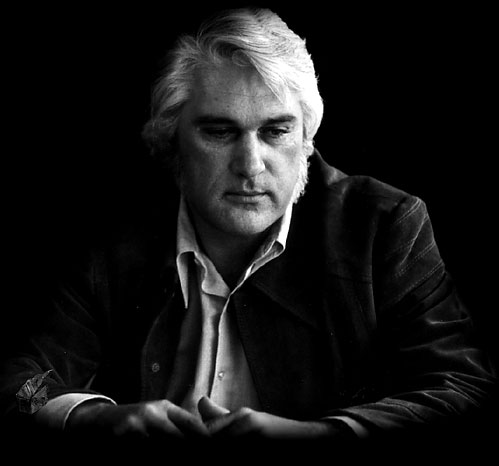
Charlie Rich - The Best of Charlie Rich [Epic], Midnight Demos, Charlie Rich Sings The Songs of Hank Williams Plus The R&B Sessions, The Complete Smash Sessions, and Feels Like Going Home: The Essential Charlie Rich. I think Charlie Rich may be my all-time favorite singer. A graduate of the venerable Sun Studios, Rich is usually considered a country singer, but for the life of me, I don't know why. Like Elvis at his best, Rich transcended the limitations of race in his time. Unlike Elvis, he wasn't a particularly flashy personality. In fact, unlike most everyone who recorded with him at Sun Studios, Rich didn't seem particularly interested in the showmanship and self-mythologizing that made Elvis, Jerry Lee Lewis, and Johnny Cash into legends. But Christ Almighty, as Tom Waits says on Nighthawks At The Diner, that he sure could sing, that SOB. Rich's voice is all about the dynamics, surging from tremulous vulnerability into, well, something not just celebratory but triumphant, all at the drop of a hat. Let's take one of my all-time favorites of his, "Life's Little Ups and Downs." The song is sung from the viewpoint of a husband who works hard and loves his wife, but has to disappoint her time and again because he just can't get ahead in his job. The music is pure Memphis soul: muted tones, piano and organ, guitar that invokes Pops Staples commenting around the margins, a quiet chorus humming: "I don't know how to tell her, but I didn't get that raise today/And I know how much she wanted the dress in Baker's window and it breaks my heart to see her have to wait/Cancel all the plans she made to celebrate/But I can count on her to take it with a smile and not a frown." The chorus singing with him here, the drums finally taking the beat: "She knows that life has its little ups and downs/like ponies on a merry-go-round." Then Charlie, solo, defiant: "And no one grabs the brass ring every time/She don't mind." Now Charlie's voice soars: "She wears a gold riiiing on her fiiiiinger" and then brings it back with an almost-growl, "And it's mine." DAMN, that's a level of detail and reality and hope and pride over real-life disappointment that other singers could rarely touch, let alone reach right through the words and emotion and touch you. Elvis at his best could lean into a song like this, but it's closer to Otis Redding than anyone. I'll tell you this: "Life's Little Ups And Downs" is the working title of my next work of fiction, but I may have to change it because the song is so much more than anything I could write. So, the music. The Best Of Charlie Rich includes some breathtakingly great material. The Midnight Demos is the second part of a collection called Original Hits and Midnight Demos. They are, as advertised, demos of Charlie Rich creating that Memphis stew of rockabilly, R&B, soul, gospel, and country that has no name. Charlie Rich Sings The Songs of Hank Williams Plus The R&B Sessions is a collection from Memphis's Hi Records, the home of Al Green. The Hank Williams covers first appeared as Charlie Rich Sings Country And Western, and, to be honest, they rarely hit the mark. The R&B Sessions, though, is Rich messing around with the Hi session musicians, and holy moley, it's righteous. The Complete Smash Sessions collects all the material from Rich's brief association with the Smash label, which produced two albums: The Many New Sides Of Charlie Rich and The Best Years. This collection includes those albums plus a couple of unreleased tracks, and man oh man, is Rich having fun, the singer at the top of his game. Feels Like Going Home was the first Charlie Rich collection I ever picked up, a choice from the bargain bin made even better by inclusion of two discs rather than one. I remembered Rich from his 70s countrypolitan records and figured I might like some of his collection, but most would be dreck. Then I put it on and heard the first few songs, which were good-to-great Sun Records rockabilly stuff, and thought: hey, score! This is okay! Then I hit "Who Will The Next Fool Be?" (Rich's biggest hit for Sun, although I didn't know the song at the time), and I was fucking floored. What the hell was this? Blues? Soul? R&B? If I didn't know Rich was white and recording for Sun, I would have assumed that it was the work of a black blues singer (Bobby "Blue" Bland, maybe) recording for Chess. And the greatness just kept coming: the classic country of "Sittin' and Thinkin'," which Elvis the C covered on Almost Blue, the swing of "There's Another Place I Can't Go," the plaintive "There Won't Be Anymore," the exuberance of "Mohair Sam." Heck, I should just mention all the titles; they're all genius. Even the countrypolitan stuff like "Behind Closed Doors."

Thursday, May 07, 2009

Music Library: Charles Mingus

Today it's all coming up Mingus!

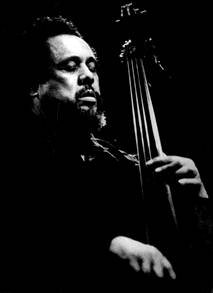
  • Passions Of A Man: The Complete Atlantic Recordings (1956-1961). This is a box set that includes tracks that originally appeared on six different Mingus albums - Pithecanthropus Erectus (1956), The Clown (1957), Blues and Roots (1959), Mingus At Antibes (1960), Tonight At Noon (1961), and Oh Yeah (1962) - plus a few others that have popped up as bonus tracks. The only problem is that the songs have been put in order of recording, rather than sequenced to the albums, which throws off the flow a bit. Or, at least, it reinterprets the relationship of the tracks to each other, which may be the point. Although Mingus had been a bandleader for decade before these recordings, this is the period where critics generally agree that he came into his own. The music on this box set is profound and wonderful, full of ambition and playfulness. If you care about music, you should hear it. It's that simple.
  • Mingus Three (1957). A more bop-oriented album with a piano-bass-drums trio.
  • Blues and Roots (1959). Although all of these tracks are on Passions Of A Man, I like them better in this sequence.
  • Mingus Ah Um (1959). Everything about this album is stunningly great. A number of these tracks are about Mingus paying tribute to his favorite musicians, but while he flavors the tracks with stylistic similarities to particular musicians, everything sounds like Charles Mingus. And it swings!
  • Shoes of the Fisherman's Wife (compilation, 1959-1971). It's not really right to call this a compilation, as it's pretty much an inexplicable album. I bought it before I knew much about Mingus, or I wouldn't have bought it. It consists of 6 of the 10 tracks on the 1959 Mingus Dynasty album, plus one track, the title track, which is from the 1972 album Let My Children Hear Music. I don't know why anyone in their right mind thought this was a good idea. This is to say nothing about the music, which is freakin' awesome, all the way through. Just a weird, weird idea that Columbia had when they made this album.
  • Charles Mingus Presents Charles Mingus (1960). Mingus compositions with more free-jazz improv than usual. The band on this is a four-piece with bass, drums, trumpet, and Eric Dolphy on alto sax and bass clarinet. Dolphy is at his best. In fact, I think he's better on this than on Out To Lunch. This has another version of "Fables of Faubus" called "Original Faubus Fables" with lyrics sung by Mingus and drummer Dannie Richmond.
  • Tijuana Moods (1962). Although it came out in 1962, this album was recorded in 1957 and sounds like the more bop-oriented Mingus of that time. Great stuff, though! Mingus has a nine-piece combo to work with here, and he used them to great effect. This version has alternate takes of 4 of the 5 album tracks as a bonus.
  • The Black Saint and the Sinner Lady (1963). This is a masterpiece. It's a ballet, composed and titled for dancers, but it's also a portrait of the artist's soul.
  • Mingus Mingus Mingus Mingus Mingus (1963). Some jazz composers record the same tracks over and over again, using the sidemen to change the flavor each time. When you dip into Thelonious Monk, for instance, you notice the same tracks coming up again and again. This one is like that in spirit, if not name. Almost all of the tracks recorded here appear elsewhere in the Mingus catalog, although almost all of them are usually better known by the other name. "II B.S." is "Haitian Fight Song" from 1957's The Clown. "I X Love" is part of "Duke's Choice" from 1957's A Modern Symposium of Music and Poetry. "Celia" is new. "Mood Indigo" is an Ellington composition that he's previously recorded for the 1959 Mingus Dynasty. "Better Get Hit In Yo' Soul" and "Theme For Lester Young" both first appeared on the 1956 album Mingus Ah Um under slightly different names (ok, "Theme for Lester Young" was "Goodbye Pork Pie Hat," which is vastly different). "Hora Decubitus" was "E's Flat, Ah's Flat Too" from Blues and Roots. And "Freedom" was a section from the as-yet uncompleted Epitaph, a major Mingus composition that would not be performed in its final version until after his death. But Mingus was at the top of his powers here, with an 11-piece band that could tear the roof off of any joint, and this disc swings like crazy.
  • Mingus Plays Piano: Spontaneous Compositions And Improvisations (1963). Sort of the flip-side to Black Saint, this album is nothing but Mingus solo playing the piano. It's gorgeous and as honest as Black Saint ("Orange Was the Color of Her Dress, Then Silk Blues" actually pulls themes from Black Saint). Where that album was capital-A Art, this one is lowercase-a art. And it's just beautiful. It's also, if I'm not mistaken, his last studio album for nine years.
  • Cornell 1964 (1964). This is a latter-day treasure find, a recording of Mingus's sextet in 1964, about to embark on the European tour that would ultimately take Eric Dolphy's life. The line-up is Mingus on bass, his regular Dannie Richmond on drums, Johnny Coles on trumpet, Jaki Byard on piano, and Dolphy and Clifford Jordan on various other horns. And hot damn!, do they ever cook. And they sound like they're having a hell of a great time, throwing quotes from folk songs and pop music and classical music in, pulling off these start-stop-switch-on-a-dime rhythmic changes as if they're nothing - it's enough to make one reconsider the popular image of Mingus as the tormented, barbaric, and mostly humorless bandleader.
  • Town Hall Concert (1964). Same band as on Cornell 1964, but there's a lot less material here.
  • Changes One (1974). Lovely album from late in Mingus's life.
  • Changes Two (1974). The companion album.
  • This Is Jazz, Vol. 6 (1996). A compilation with material from Mingus Ah Um, Mingus Dynasty, "The Shoes of the Fisherman's Wife," and a part of "Epitaph." Completely unnecessary.

Saturday, May 02, 2009

Fisher-Price presents My First Twittering!

I don't know that this is a good idea, but I am involved: http://twitter.com/NothingButDick.

Music Library: Cesária Évora, Champale, Charioteers, Charizma and Peanut Butter Wolf, Charlatans, Charles "Wigg" Walker, Charles Brown

Cesária Évora - Best Of and The Very Best of Cesária Évora. Singer from Cape Verde (where the national language is Portuguese) who exemplifies the native Cape Verdean style of music called morna, which sounds much like Caribbean swing.

Champale - Simple Days. Wry chamber-pop band from the midwest (I think) that was on Camper Van Beethoven's Pitch-A-Tent Records. Somewhere between Belle & Sebastian and Clem Snide. The first track, "Hard To Be Easy," is the standout.

The Charioteers - Keep On The Sunny Side of the Street. Vocal group active between 1930 and 1957. Dabbles in swing, gospel, and pop. I believe the doo wop groups took a lot from them. Like a lot of early 20th-century pop music, I like this for historical reasons, but too much makes me feel like an aficionado of megaphone crooners.


Charizma and Peanut Butter Wolf - Big Shots. Semi-old school rap (circa 1991-1993). Peanut Butter Wolf is the DJ and producer behind Stone's Throw Records. Charizma was his childhood friend and MC in the early 90s, and this is the album they recorded together, supposed to be the first of a long collaboration. Tragically, Charizma was shot in a mugging at the end of 1993, and this album wasn't released until 2003, after Peanut Butter Wolf found some fame. This is excellent stuff.

The Charlatans - You Cross My Path. British indie-pop band. Unoffensive, but they don't do much for me.

Charles "Wigg" Walker - "Come On In." Heavy, heavy Southern-fried funk.

Charles Brown - Driftin' Blues: The Best of Charles Brown. Hey, that's bluesy! Texas-bluesy, apparently! A big influence on a certain Mr. Ray Charles, according to Wikipedia.

NEXT: Charles Mingus! A lot of Charlie Effin' Mingus!

Friday, May 01, 2009

The Screengrab: Death Watch

Also at the Screengrab: the final curtain is nigh.

Screengrab Death Watch: Day One

That was published Wednesday. We've got until June 1 and then we're on the cutting room floor.

My photo
Cary, NC, United States
reachable at firstname lastname (all run together) at gmail dot com

About This Blog

From Here To Obscurity, founded ca. 2003, population 1. The management wishes to emphasize that no promises vis-a-vis your entertainment have been guaranteed and for all intents and purposes, intimations of enlightenment fall under the legal definition of entertainment. No refunds shall be given nor will requests be honored. Although some may ask, we have no intention of beginning again.

  © Blogger templates Brooklyn by Ourblogtemplates.com 2008

Back to TOP