Friday, May 01, 2009

At The Screengrab: Great Beginnings!

The Screengrab list o' the week is about the best opening sequences in film.

Part I: Touch Of Evil (which I wrote), Once Upon A Time In The West, Raising Arizona, and The Player.

Part II: Mulholland Drive, Boogie Nights, Manhattan, and 8 1/2 plus Wild Strawberries (which I wrote).

Part III: Cliffhanger, Werckmeister Harmonies, Dawn of the Dead, and No Country For Old Men (which I wrote).

Part IV: Do The Right Thing, Apocalypse Now, Barbarella, La Dolce Vita, and The Searchers (which I wrote).

Part V: The Wild Bunch (which I wrote), Blow Out, Goodfellas, Dead Man (which I wrote), Jackie Brown, and Jaws plus Star Wars.

Check 'em out!

Music Library - The Casting Couch, Cat Power, Catherine Marchese/Emile Naoumoff/Erik Satie, Cave Singers, Cecil Taylor, Centro-Matic

Blah, been sick all week. Anyway, here's some music reviews for your pleasure.

The Casting Couch - Row Your Boat and Live Tracks from the Flaming Lips Hoot Night. Much-lamented (from me, at least) local band that played alt-country with Elephant Six-ish psychedelic flourishes. Great stuff!

Cat Power - Moon Pix, You Are Free, The Greatest. Three vastly different albums from Chan Marshall that all sound like each other without sounding alike at all. On Moon Pix, she's backed by 2/3 of The Dirty Three, and the album is suitably abstract. You Are Free is a more rocking affair, and The Greatest has Memphis soul slathered across it. I was rather indifferent to Ms. Marhall the first few times I heard her, but she has grown on me over time.

Catherine Marchese / Emile Naoumoff - "La Balançoire" (Erik Satie, Composer). This is "The See-Saw," the short track that Richard Thompson plays at the end of "The Great Valerio." I have more Satie, but I think it's filed under his own name.

The Cave Singers - "Seeds Of Night." Pleasant alt-country track that eMusic offered for free a while back. I usually delete those, but not this one. It's pretty good.

Cecil Taylor - Looking Ahead, Air, Student Studies, Unit Structures, Indent, and "In Florescence." Taylor is one of the parents of free-jazz, and it's interesting to hear how his ideas progressed from the 1958 Looking Ahead through the 1961 Air to the wild sounds of the late 60s (Student Studies, Unit Structures), early 70s (Indent), and into the 80s ("In Florescence").

Centro-Matic - The Static vs. The Strings Vol. 1, All The Falsest Hearts Can Try, South San Gabriel Songs/Music, Love You Just the Same, Flashes and Cables EP. The first albums are like the Flaming Lips with a more pronounced folk bent. At South San Gabriel Songs/Music, the band peels off the folk into the side project South San Gabriel, which, like Califone, mixes Americana with electronics. The latter albums are more rocking, but I've never managed the enthusiasm to pick up any further Centro-Matic (I think there's only two later albums and two earlier ones).

The Moviegoer Part II: March - April 2009


Here's what I have watched in the last two months with an accompanying grade. Some of these were not the first time I'd seen the movie. There were 32 in the Jan - Feb list, so I'll start this one at 33 and count these cumulative for the year.
33. This Is Not A Photograph: The Mission of Burma Story: A-
34. WALL-E: A+
35. It Happened One Night: A
36. Beeswax: B
37. American Prince: B
38. Best Worst Movie: A
39. American Boy: A-
40. Wild Strawberries: A+
41. The Face of Another: A
42. Synecdoche, New York: A++
43. Visions of Light: The Art of Cinematography: B+
44. The Hemingway Night: A+
45. Around: B-
46. Monsters Vs. Aliens: B
47. Duma: A
48. Bicycle Thieves: A
49. Visages d'Enfants: B
50. The Strangers: B-
51. Miss Pettigrew Lives For A Day: B
52. The World's Greatest Sinner: A-
53. F For Fake: A+
54. Tokyo Story: A
55. The Comedians of Comedy: B
56. Zach Galifianakis Live: B
57. Morvern Callar: A-
58. Grindhouse: B-
59. Let The Right One In: A
60. The Burmese Harp: A
61. Futurama: Bender's Game: B
62. Kiss Me Deadly: A
That's 32 in the last list and 30 in this one. Oh, how I've wasted my life!
Read:
Wire's Pink Flag (33 1/3) by Wilson Neate
Go Down, Moses by William Faulkner

Monday, April 27, 2009

Music Library: Carla Bozulich, Carla Bruni, Carly Simon, The Carpenters, The Carrie Nations, The Cars, The Carter Family

Metal week! Wait, no. This one goes the other way.

Carla Bozulich - The Red-Headed Stranger and Evangelista. The first is Carla Bozulich - she of the mighty Geraldine Fibbers and partnership with Nels Cline - covering Willie Nelson's classic album, track by track. Cline's distinctive guitar is all over this album, and Willie himself shows up to duet with her. Awesome. The latter is a Bozulich's follow-up (her current band now calls itself Evangelista), an emotional chamber-noise album not unlike Scott Walker's recent work. Cline's all over that one, too, although I understand that he's not been a part of the more recent Evangelista work.

Carla Bruni - Quelqu'un M'a Dit and No Promises. Mrs. First Lady of France's not-terrible folk-rock albums. They don't have much going for them, but they're definitely not offensive. Well, the latter album, which reworks Romantic poetry into Jack Johnson-like acoustic guitar jams, is kinda offensive.

Carly Simon - "You're So Vain". I love this song. So sue me.

The Carpenters - The Singles 1969 - 1973. My wife's album. I like "Superstar," but the rest lay on the fromage.

The Carrie Nations - "Sweet Talkin' Candy Man." A neat-o slice of chick-garage from Beyond The Valley Of The Dolls.

The Cars - The Cars. I really like The Cars. I should buy more of their albums. It's bubblegum, but in the best way.

The Carter Family - "Wildwood Flower (1928)," "See That My Grave Is Kept Clean," "Wildwood Flower (1935)," "Keep On The Sunny Side," Longing For Old Virginia: Their Complete Victor Recordings 1934, and Country Music Hall of Fame Series. Man, I wish I had more Carter Family recordings. Talk about your country gold.

"Casey Kasem Loses It" - The famous viral recording of Mr. Kasem at his worst.

Thursday, April 23, 2009

Music Library: Cannibal Ox, Cannonball Adderley, Captain Beefheart, Captain Kangaroo, Cardinal, Caribou

Cannibal Ox - The Cold Vein. I've already proven that I can be surprisingly inarticulate about music that I know quite well, so what I have to say about hip-hop is even more discomgargulambulish. So, uh, wow! What a great album!

Cannonball Adderley - Somethin' Else, Things Are Getting Better, Fiddler On The Roof, Mercy, Mercy, Mercy! Live at "The Club", and Spontaneous Combustion. First-rate hard bop, all the way through.

Captain Beefheart:

  • Safe As Milk. Beefheart's first effort has quite a few brilliant tracks, but the most damning thing about it is that it sounds like a product of its time. There's indications here and there about where Beefheart was headed, though, most notably "Abba Zaba" and "Electricity." I don't have the next album, the out-of-print Strictly Personal, but a few of the songs are bonus tracks on this release.

  • Trout Mask Replica. I detested this album the first time I heard it. I mean, I knew it was something different and new (to me, at least; the album was at least 21 years old at the time, older than I was when I first heard it), but I had no vocabulary for the cacophonous structure of the songs, no way into the music. It was difficult, proudly and defiantly difficult. There were in-jokes I didn't understand, constant time-shifts, songs that could have been about any number of things. I was a fan of the Minutemen, which was why I was interested in checking Beefheart out, but I couldn't hear how his deconstruction of rock music had led from the blues and garage-rock to the minimalist Minutemen aesthetic. I can hear it now, though. It's still unlike most anything else (Beefheart's followers have mostly found a way to put his radical ideas about disorientation in music into a more pop context), almost impossible to mix into other sounds because many of the songs make no sense out of context, but it's also a brilliant album and a fun listen at long last.

  • Lick My Decals Off, Baby. The follow-up to Trout Mask Replica, Lick My Decals Off, Baby is fantastic stuff, maybe not quite as wild and experimental, but still different from just about anything else. The addition of the marimbas is quite a lot of fun, too. The album after this is Mirror Man, which includes more reworkings of the Strictly Personal material. But I don't have it.


  • The Spotlight Kid. This is the first of two 1972 releases. Beefheart pulls back on the peripheral weirdness without losing all of the oddity central to his sound. This is more explicitly bluesy than the immediately prior Beefheart albums, but not out of line with the earliest Beefheart.


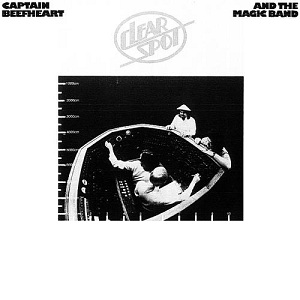
  • Clear Spot. The second 1972 album, this one is even more commercial, incorporating backing vocalists and horns and groovy, relaxed guitar parts in 4/4 time. The producer is Ted Templeman, mostly known at the time for easygoing semi-bluesy rock in the Doobie Brothers & Van Morrison vein (he later became the go-to guy for Van Halen, too). And this sounds like Beefheart covering Van Morrison. It's mostly great despite that description. In fact, even the tracks that seem the farthest out from the Beefheart aesthetic are pretty terrific.

  • Bluejeans and Moonbeams. I don't have the prior album Unconditionally Guaranteed, but I understand that, like this one, it's an unbridled attempt to fit Beefheart into an even more commercialized sound. Clear Spot was about as commercial as I can take Beefheart. This is over the line. No fun at all.


  • Doc at the Radar Station. Prior to this is Shiny Beast (Bat Chain Puller), a Zappa-produced album that I'll have to pick up sometime. But this album is what I want and expect from a Beefheart album: deconstructed blues-oriented rock with jagged rhythms and overlapping guitars all piled together into music that's more or less sculptural in nature.
  • "Ashtray Heart" and "Hot Head" from Saturday Night Live. Mp3s of the wonderfully messy live versions from Beefheart's appearance on SNL back in 1979.
  • Ice Cream For Crow. This is probably the last Beefheart album ever, since he's basically retired from music in favor of painting now. And it's a great album. Beefheart and his band sound like they are having a blast, and the music is wild and clever and fun like on his classic albums.


Captain Kangaroo Narrates Peter and The Wolf. I downloaded this from eMusic because my son likes the Peter and the Wolf story and music. I remember this album fondly from my childhood and thought he might enjoy it. So far, nope.

Cardinal - Toy Bell EP, Cardinal, and Cardinal and The Flaming Lips Live in Norman, OK 9/3/95. Cardinal was a brief collaboration between the psychedelic folkster Aussie Richard Davies (previously of The Moles) and Oregan-based chamber-pop experimentalist Eric Matthews. The Toy Bell EP (Bob Fay of Sebadoh was part of the band then) is a great look forward to the lush gorgeousness of Cardinal, one of my all-time favorite albums. As of last year, Davies and Matthews were supposedly working together again, but they split it off over creative differences. Having encountered Eric Matthews on-line, I can say that he's a temperamental sort who de-friended me suddenly on Facebook, apparently for having the temerity to support the current President over the last one. I don't know anything about Davies personally, but I could see where their personalities may clash. The bootleg is basically Davies (sans Matthews) with the Flaming Lips playing backing band as he runs through Cardinals and Moles songs.

Caribou - Andorra. Laptop indie pop, very catchy, but very disposable, too.

Wednesday, April 22, 2009

MBV: They Made Me Realise


I saw/felt/was pummeled by My Bloody Valentine last night.

Mike McGonigal was right: watching the audience was the best part. MBV did the sonic assault thing for about 15 minutes during "You Made Me Realise." For the first five, it seemed like people were having trouble just hanging on. Then there was a crest, and the sound was rising, and you could see on people's faces how they were rising with it. Afterwards, we went to a bar and all the concert-goers pouring in looked high, all sleepy-eyed with shit-eating grins stretched across their faces.

The rest of the show was great, too. I imagine that it's roughly the same setlist that they would have played in 1993.

Another Good Show Down The Drain

Kings: too good to last. NBC is going to burn off the rest of the episodes in June. I still don't understand major-network TV economics. Why go to all the expense of producing a show if you're not going to try to promote it to the most likely audience (in the case of Kings, the show would most likely appeal to fans of Deadwood and other intricate cable dramas, but the promos made it look like Dawson's Creek With Butterflies)? Why not distinguish between quality tv and shitty sitcoms? Why not push the quality tv off to the expanded cable networks owned by the same company if the networks can't afford to take risks?

Tuesday, April 21, 2009

Music Library: Can Comes Alive!

Having Fun With Can On Stage!

As I wrote the other day, Can was willing to indulge whatever it took to make their album work. Generally the band recorded hours upon hours of music and would then edit the mixes down to an appropriate size. Often the band would have to learn the songs again after editing them. There's something to be said for how in-tune the core members of the band were with each other. They could shift on a dime, somehow all of them knowing that this moment was the right moment - 12 minutes into their improvisation - to go to a completely different sound. That sort of psychic connection is a rare thing, and it's even more impressive to hear live. Much of Can's live sound was about improvisation without ever dropping to the endlessly dull jam-band approach of guitar leads over two chords forever. That shit is toxic. Instead, Can would be constantly reinventing the song, constantly searching for transcendence through collective music. No one held down the background: Jaki Liebezeit's drumming was as important a component to the sound as Holger Czukay's superfast pulsating bass, Michael Karoli's wailing guitar, and Irmin Schmidt's increasingly abstract and noisy keyboards. The vocals were the least important part of the bad, although ultimately necessary because the human voice gives listeners an in with the music, even when it's mostly gibberish or sung-snapped in Japanese, and Can's music has a steep learning curve.

So this post is about my Can bootlegs, although it starts with the official release from the Can Box. Some of these bootlegs include unreleased studio work. Fortunately, a kind soul out there has catalogued a bunch of Can concerts and studio releases to help us keep this all straight.

Can concerts, for your cross-referencing thrills.

Can studio work, for those who cannot get enough.

  • Can Box Music. Towards the end of "Jynx," the first track on the Can Box Music disc, Holger Czukay's bassline turns into Sly & The Family Stone's ultra-funky "Thank You Falletime Be Mice Elf Again." "Jynx" is a 16-minute improvisation from October 1975, post-Damo Suzuki, pre-Rosko Gee (the bassist who replaced Czukay, allowing him to start adding random noise from backstage, which somehow managed to be less interesting than it sounds). The second track is a version of "Dizzy Dizzy" from a month later that incorporates elements of the song without ever being recognizeable from the album version. This is followed by a version of "Vernal Equinox" from the same show, propelled by the drumming and bassline. "Fizz" is from the 1977 version of Can, with Czukay on noise and Gee on bass. The noise is interesting, but Gee was not up to Czukay's level of bass. There's a version of "Yoo Doo Right" from 1975 that's pretty great. The shortest track on the album is the less-than-5-minute "Cascade Waltz" from the 1977 Rosko Gee version of Can. The second disc opens with the "Colchester Finale," a 37-minute improvisation from 1972 that includes parts of "Halleluwah" with Damo Suzuki doing his jabbering Damo Suzuki thing. Then there's an 8-minute improvisation called "Kata Kong," followed by a 14-minute version of "Spoon" from 1972, held together only by the insistent 1-2-and-4 rhythm of the keyboard sound. All in all, it's a great introduction to Can's live approach.

  • Rare & Unreleased Vol. I. and Canaxis 5: Studio Demo Tapes. Both of these include a bunch of studio stuff from roughly the same time as Delay 1968 and a couple from the Ege Bamyasi sessions. They are both virtually the same, although the tracks are in reverse order on each. The versions are slightly different, though, and while I'm not sure I need both, I also don't know that I can decide which to get rid of. The former has several b-sides unavailable on the latter, but the former is also mastered faster, so that all of the tracks are about a whole step higher than they are on the latter, usually leading to about a 30-second difference in running time.

  • Mother Sky (06-1971 Berlin). If the Can live page is right, this is actually from May 22, 1972, so I'll adjust the date accordingly. The first track is a 19-minute improvisation called "Standing So High." The second track is 21 minutes and incorporates parts of "Vitamin C" and "Bring Me Coffee Or Tea." The third track is called "I Don't Care" (9+ minutes) and appears to be "Bring Me Coffee Or Tea" again. The fourth track is listed as "Mother Sky" (12 minutes), which does have parts of that song amongst the sonic craziness. The last track (10+ minutes) is listed as "Spoon," and it starts with "Peking O" before turning into the familiar sound of "Spoon."

  • 22 Oct 1971 Volkshalle Walzerborn, Steinberg DE. My version differs from the Can live page version, so it may be a completely different show. Sound quality is bad. It starts with a 5-minute untitled improvisation that seems to pull from parts of "Aumgn" before cutting out abruptly. My second track is an 8.5 minute "Peking O" that has nothing from "Peking O" and parts of "Halleluwah" and "Paperhouse." Another abrupt stop. Third track is listed as "Paperhouse," but it's "Full Moon On The Highway." Fourth track is a 4-minute improvisation incorrectly listed as "Full Moon." Fifth track is an untitled 3.5 minute ambient piece. Sixth is a 6-minute untitled piece that is unidentifiable. Seventh is 4.5 minutes of "Halleluwah." Last is 6 minutes of "Turtles Have Short Legs."

  • 1972 05-08 Colchester/University of Essex. This is a kick-ass bootleg, the source of the monster "Colchester Finale" from the Can Box Music album. Starts off with a 16+ minute improv, following by 19+ minutes of "Halleluwah." Then a 12-minute "Paperhouse," split into two tracks for some reason. Then nearly 20 minutes of "Spoon" with an audible tape splice about 15 minutes in. There's 6 minutes of an untitled improv, then 13 minutes of "Bring Me Coffee Or Tea." Then the 37 minute "Colchester Finale," which touches on a number of tracks form Tago Mago before finishing up with a reprise of "Halleluwah." HEAVY.

  • Horrortrip in the Paperhouse and Free Concert: Live 1973-03-02 Koln. This is the famous free concert from June 24, 1972 included in its entirety on the Can Box movie. I have two versions, both listed with the wrong date. And they both sound pretty good, so I'm not sure whether to keep them both or delete one. For some reason, both add a 27-minute improvisation at the end from a show on Feb 19, 1973 which is wrongly attributed as "Pinch" on both.
  • Paris Olympia 1973. The Can live page lists this as May 12, 1973. Four tracks: "Improvisation" (35 minutes), "One More Night" (9 minutes), "Spoon" (32 minutes), and "Vitamin C" (14 minutes). The Can live page names the opening improv "Whole People Queueing Down," which I'll do, too. "Spoon" should include an improv they call "Stars and Lines."
  • The Emdias Theatre, Edinburgh. The Can live page lists this as August 25, 1973. Two tracks, the first 14 minutes and the second over 30, both listed as improvs. The first one should be titled "Soup" and the second one "Bel Air." Surprisingly good sound quality.
  • 1973 August 25 Edinburgh. Same show! Same tracks! Worse sound quality, so it's gone.
  • The Peel Sessions. The first track, "Up The Bakerloo Line With Anne," is from February 1973. The next three tracks are from 1974 and the final two were from 1975. None are studio releases. They're all pretty experimental, too. I like to think John Peel liked it that way. Top notch stuff.

  • Radio Waves. This is a grab-bag of live Can from TV and concerts plus two b-sides that have appeared elsewhere. First is the complete 35-minute "Up The Bakerloo" from the Peel Sessions. There's a version of "Paperhouse" from 1971 for the German Beat Club TV show. There's a 15-minute improv called "Entropy" from the actual show in June 1971 (rather than the wrongly attributed one on the Mother Sky bootleg). There's another Malcolm Mooney studio outtake from 1969. And there's "Turtles Have Short Legs" and "Shikaku Maru Ten" again.

  • Spoon Over Babaluna. Bad sound quality! All three are live tracks recorded for the BBC. Starts with a 24-minute improv from Feb 19, 1974 called "Tadjidid Janid." Then there's two tracks from Nov 18, 1975. The first is an improv called "Senoussi" and the second is a stunning version of "Vernal Equinox." There's a clip of the band playing this version on the documentary in the Can Box.

  • Stuttgart Halloween 1975. Opens with an improvisation that the Can live page says should be called "Morning Glory." Then it goes into "Bel Air" followed by "Dizzy Dizzy" and winds up with a final track of "Pinch" into a jam called (unfortunately) "The Gypsy." The track fades out after roughly 28 minutes of this, but the Can live page suggests that there was at least another 6 minutes to the track.

  • 1975 May 17 Colchester: Future Days & Past Nights. Apparently the real Future Days etc. bootleg opens with 45 minutes of "Chain Reaction" into "Bel Air." Neither are on this bootleg, which picks up with "Dizzy Dizzy" from the same show and runs through the end. This includes "Pinch" into "Mother Sky." "One More Night," then "Half Past One," then "Vitamin C." Then there's the long, frequently-played, never-recorded-in-the-studio, and not-so-great jam "Meadowsweet," then "The Gypsy" into a raucous "Full Moon On The Highway." It all winds out with the short mess-around piece "Up The Floyd."

  • London + Grenoble. Weird bootleg. Starts with a show recorded in Grenoble on January 16, 1976 with the core members of the band. Track listing: "Pinch," "Dizzy Dizzy," "Chain Reaction/Half Past One," "Vernal Equinox" (with long improvisations at the end, split into three tracks on my boot), then a track I don't know called "Ibis." The second disc is a show recorded in London on December 4, 1976 with Holger Czukay on noise and Rosko Gee on bass. Track listing: "Moonshake/Don't Say No," "Vitamin C," "Pinch." The Grenoble show: great. The London show: so-so.

  • Paris to Langelsheim. Another weird one. These were taken from a tour with guest vocalist Michael Cousins. The first track appears to be a recording of "Vertigo" from March 19, 1976 in Paris. The next three recordings are from April 10, 1976 in Langelsheim: "Goosie Goosie," "Spoon," and "Made In Japan." Only "Spoon" is a song that appeared on a Can album.
  • Germany 1976 Vol. 1. This is the first set of a show recorded April 11, 1976 in Hannover. The tracks are "Vitamin C," "One More Night," "Bel Air," and "Dizzy Dizzy." Proof that the core members of Can could produce some scalding experimental soup even while making tepid disco albums.

My photo
Cary, NC, United States
reachable at firstname lastname (all run together) at gmail dot com

About This Blog

From Here To Obscurity, founded ca. 2003, population 1. The management wishes to emphasize that no promises vis-a-vis your entertainment have been guaranteed and for all intents and purposes, intimations of enlightenment fall under the legal definition of entertainment. No refunds shall be given nor will requests be honored. Although some may ask, we have no intention of beginning again.

  © Blogger templates Brooklyn by Ourblogtemplates.com 2008

Back to TOP