Thursday, July 23, 2009

Feelies Reissues!

It's about time! Pitchfork has the news.

Wednesday, July 22, 2009

Music Library: Elvis, Emanuel Ax et al, Embarrassment, Emerson String Quartet, Emitt Rhodes, Emmett Miller, Emmylou Harris, Emotions, English Beat


Elvis Presley - The Complete Sun Sessions (1987), "I Got Stung" (1958), and The 50 Greatest Hits (2000). This is pretty much all the Elvis I need, although those giant box sets of a decade or so back are still tempting, if only because I remember listening to the 60s box, which has a lot of Elvis singing clambake stuff in a bored tone, but then suddenly, for whatever reason, he would decide that this particular song - this B-side to a song that no one really liked - would be one where he'd just rip it out and let everyone know he was The King. When he was inside the song, he embodies it in such a way that you still can hear why everyone agrees on Elvis (excepting Chuck D, of course).

Emanuel Ax, Isaac Stern, Jaime Laredo, Yo-Yo Ma - Brahms: The Piano Quartets Op. 25, 26 & 60 (1991). Considering that I must talk about classical music today, I find that I have very little to say: I like this. It is good. These musicians, they sure know their stuff. And the music sure is pretty. Housekeeping question: should I file these under the composer or the performer? I have no standard.

The Embarrassment - "Podman," Heyday 1979 - 1983, and Blister Pop (2001). Punk hits the Midwest! The Embarrassment brought the post-punk/college rock and should have been bigger than they were. Standout tracks are "Sex Drive," "Elizabeth Montgomery's Face," and "Death Travels West."

Emerson String Quartet - Bartók: The String Quartets (1988) and Schumann: Trio and Quartet (1993). I like that Bartók. What a composer, eh? And that Schumann is no slouch, either. Say, these Emerson String Quartet guys are quite solid! This is embarrassing. My pal Steve Hicken sent me a link to a music theory website yesterday. I really needed to read everything on it before pretending to talk about string quartet music.

Emitt Rhodes - Listen, Listen: The Best of Emitt Rhodes (1995). Rhodes is a guy who really loves Paul McCartney, but is mostly known for being one of the first bedroom artists, a guy who made elaborate multitrack music at his home studio in the late 60s/early 70s. There's a few truly great tracks on here, especially "Time Will Show The Wiser," which Fairport Convention covered.

Emmett Miller - Minstrel Man From Georgia (1996). Man, when I first picked up this CD, I was ashamed to let anyone catch a glimpse of it. The cover had a picture of Miller, a minstrel who performed in blackface. Thankfully, they've changed the cover now to a generic image of an Okeh acetate. Nick Tosches has gone on at length about Miller in two books (Country: The Twisted Roots of Rock & Roll and Where Dead Voices Gather), but the main thing to know is that Miller recorded songs that would later provide some of the backbone of country music ("Lovesick Blues," recorded by Hank Williams, "I Ain't Got Nobody" and "Right or Wrong" by Bob Wills, among others, plus his vocal style can be heard in Jimmie Rodgers, Hank Williams, Tommy Duncan, Merle Haggard, and many more) while having some giants of jazz in his band (Gene Krupa, Tommy and Jimmy Dorsey, Eddie Lang). Despite the ugly specter of racism hanging over every track (most feature some incredibly offensive blackface skits to lead them off), the music is surprisingly vital, and that tension is part and parcel of the history of popular American music.

Emmylou Harris - At The Ryman (1992) and Red Dirt Girl (2000). Emmylou Harris is a beautiful person, lovely to look at, lovely of voice, and by all accounts possessed of a lovely personality. She is one of the greatest accompanyists in rock and country music, and can lift even the most standard dreck into the realms of greatness with her harmony lines. When she is singing with someone else on material that's already fantastic (such as the works of Gram Parsons), she makes a good thing better. But I confess that I don't have much use for her as a frontperson. At The Ryman is a pretty fun live bluegrass set of Emmylou & company covering a bunch of classics, but Red Dirt Girl - like most of her solo albums - does nothing for me. Plus it's overcompressed like crazy, which makes it hard to listen to.

Emmylou Harris, Linda Ronstadt, and Dolly Parton - Trio II (1998). While I like the first and last of these singers, this album doesn't do much for me. My lovely wife likes it, though, so it has something going for it.

The Emotions - "Best Of My Love." Job security just in case I ever take a job as a wedding DJ.

The English Beat - What Is Beat? (1983). Greatest-hits comp from the ska revivalists. Great stuff!

Tuesday, July 21, 2009

Music Library: Elvis the C


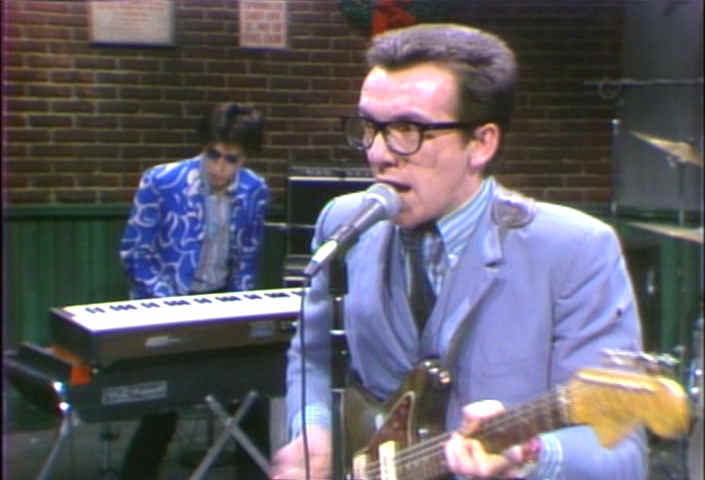
Elvis Costello: I'm going to keep this one short. If you're looking to me to help you navigate the Elvis the C library, you're probably ignoring the considerable (and considerably more helpful) information elsewhere on the web.

  • My Aim Is True (1977). The mostly excellent debut with Clover, aka Huey Lewis and the News backing him up. This is the 1993 Ryko reissue.
  • Live at the El Mocambo (1978). An early live show with the Attractions, who play everything at light speed. Will peel your ears.
  • This Year's Model (1978). My favorite Elvis C album. This is the 1993 Ryko reissue.
  • Armed Forces (1979). My 2nd-favorite Elvis C album. This is the 1993 Ryko reissue.
  • Get Happy! (1980). Elvis's R&B album. This is the 2002 Rhino reissue.
  • "You'll Never Be A Man" (from Trust, 1981). I used to have a cassette of this, but I've never sprang for a reissue or download. Should remedy this.
  • Almost Blue (1981). Elvis's Nashville album. It's not terrible, and his version of Leon Payne's "Psycho" is one of the best. This is the 1994 Ryko reissue.
  • Imperial Bedroom (1982). Elvis's big studio album. Near perfect, despite its flaws. This is the 1994 Ryko reissue.
  • Goodbye Cruel World (1984). Elvis's worst album (by stint of the crappy production, not the songs, which sound better in a different setting). This is the 2004 Rhino reissue (includes Elvis's cover of Richard & Linda Thompson's "Withered & Died.")
  • The Best of Elvis Costello and the Attractions (1985). Only the tracks that aren't on the albums in my collection, namely Trust and 1983's Punch The Clock. If/when I get around to picking those up, I'll delete the rest of these.
  • King of America (1986). A touching Americana album that serves as Costello's analog to Dylan's Blood On The Tracks. This is the 2005 Rhino reissue.
  • "Beyond Belief (Live)" from Girls Girls Girls (1989). I'm actually not sure where this is from. I think the version of "Beyond Belief" on Girls Girls Girls isn't a live version.
  • When I Was Cruel (2002). Reportedly Elvis's return to form with most of the Attractions. The touchstone for reviewers was 1986's Blood & Chocolate, an album sadly missing from my collection. I think: eh, it's okay.
  • My Flame Burns Blue (Live with The Metropole Orkest) (2006). Maybe the best of Elvis's arty albums. I like it, which is more than I can say for most of his art/jazz/classical stuff.

Monday, July 20, 2009

Music Library: Elizabeth Cotten, Elizabeth McQueen, Ella Fitzgerald, Ella Johnson, and Elliott Smith


Today's about the ladies! Plus one sad dude.


Elizabeth Cotten - Freight Train and Other North Carolina Folk Songs and Tunes (1958). Do you know the story of Elizabeth Cotten? She taught herself to play guitar and banjo upside-down and backwards (because she was a lefty) when she was a kid in the 19-oughts. She wrote "Freight Train" and "Oh Baby It Ain't No Lie" when she was maybe 13. She taught them to a few blues musicians traveling through town (that was Chapel Hill, NC). Then she got married and knocked up when she was all of 15. For 40-odd years she didn't touch a guitar, while her songs were passed around and renamed and because known as blues classics. Then, by happenstance, she got a job working as a maid in the Seeger household in the 50s. One day they played her some of Mike Seeger's field recordings of folk and blues songs, which were part of his work for the Folkways label. She mentioned that she played guitar in her youth and wrote a few songs, and then she proceeded to play "Freight Train" for the Seegers, a simple fingerstyle blues with the wild alternating bass that marked all of her songs, but, of course, when she played it, it was upside-down and backwards. Say you're a linguist and your job is to find everyone who speaks Navajo and record them before the language disappears. Then, by chance, you find out that your housekeeper doesn't just speak Navajo, but she wrote the Navajo version of The Odyssey. When she was 12. Some hours later, they must have finally peeled their jaws off the floor and started the tape machine. Anyway, I want to say "if you take fingerstyle guitar and folk music seriously, you should own a copy of this," but that sounds like homework, and Cotten's songs are fun. So trust me on this. Her voice is rather tuneless, plus she's all of 67 in this recording, so take that into account. But it doesn't matter.

Elizabeth McQueen & The Firebrands - Elizabeth McQueen & The Firebrands EP (2001) and The Fresh Up Club (2003). McQueen is a delightful singer who has gone on to join Asleep At the Wheel, which means that she sang a duet or two with Willie Nelson on his last album. From humble beginnings! My wife and I used to go see her play with her honkytonk friends at the Carousel, the lovely little dive bar just up from our house. The first of these is their demo EP and the second, their first and - I think - only release. McQueen was clearly headed for bigger things even then, and success couldn't come to a nicer person.

Ella Fitzgerald - The Early Years, Pt. 1 (1935-1938), The Early Years, Pt. 2: The Original Decca Recordings (1939-1941), Ella & Louis [with Louis Armstrong, natch] (1956), The Best of the Songbooks (1993), "Azure," and Portrait of Ella (1996). Oh, like you really need me to tell you about Ella Fitzgerald. Of these recordings, the first two are a little trying for those of us who don't remember WWII, the Ella & Louis set is far greater than sliced bread and almost as good as single-malt whiskey, The Best of the Songbooks is an excellent collection, "Azure" is one of my favorite songs by anyone, and Portrait of Ella is a less distinguished collection.

Ella Johnson - "I'm Tired Of Crying Over You." Big-band swing! The voice was different, but otherwise this could have been one of Ella Fitzgerald's Decca sides.

Elliott Smith - Elliott Smith (1995), Either/Or (1997), "Miss Misery," XO (1998), Figure 8 (2000), and From A Basement On The Hill (2004). I have five Elliott Smith albums? Seriously? I mean, I like the guy okay, but he's not one of my favorites, and, honestly, I have a hard time naming any song that's not on the first two albums. But okay, I have five albums. I get diminishing returns on his work the more I listen to it. Am I alone in this?

Big Stars in the Radio City


My friend Phil, a guy with an ear for extreme jazz and metal who just doesn't have much appreciation for guitar pop, was asking what makes Big Star so special to fans. I mentioned that I thought they were pretty sophisticated for power pop and quite different from, say, Tom Petty's three-chord, major-key songs. He asked me to clarify, and this is what I wrote:

Take "Feel," a Chris Bell song. That main descending riff that starts out "Feel" isn't anything too crazy, a variation on a traditional blues riff. The first guitar holds a G on the low string and then walks down a half-step at a time from the 5th, the D. They do this twice, with the lead guitar doing those high bends during the second run. Then the song changes keys to D for the verse. It's a Chris Bell song, so this is the big three-chord, major-key stuff: D G A. Back to the riff for the chorus. The second verse is a guitar solo (which is itself a variation away from how rock songs traditionally work), but at the end of the verse, they interrupt the progression of the song to throw in those Memphis horns doing R&B riffs for 8 repetitions (at least, I think it's 8 - I'm going by memory), back to the chorus although with minimal rhythm accompaniment here, then - do they repeat the first verse before going back to the chorus? I forget.

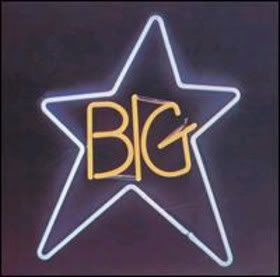
See, there's a radio interview on Big Star Live where the DJ says that what they're doing is a big throwback to the British Invasion, but he was very, very wrong. They've taken the melodies and high harmonies and chugging guitars from the British Invasion and made something very domestic, something that could have only come out of Memphis. The section where they add the R&B horns (with trilling blues-rock guitar) doesn't sound like anything that the Beatles or Kinks ever did. But when Chilton wrote music, it was something else.

His first track, "The Ballad of El Goodo," is next. He's a big fan of Gram Parsons, and his first album (which is now called 1970) has a lot of the trappings of Parsons' art-country songs. This one is in that vein, but has a few chords that show that Chilton was raised on jazz. The song starts in the key of C (with a cool Am7 for minor dissonance in the first line). The second line starts on a Bm, which suggests that the key is now G, which is similar enough to C that most people won't notice, but then the line ends with a D#, which is a half-step up (or down) from any chord that would appear in either G or C. The rest of the song jumps back and forth between G and C without really drawing attention to itself, and, in fact, when he goes to an F (which translates to C, but not really G), the guitars bend the rules by adding a G into the chords. It's subtle, like I say, but it keeps the song off-kilter while still allowing Bell and Chilton to work out the gorgeous melody.

Most of the rest on #1 Record is more traditionally bluesy or garage-y or folky, although they keep the Memphis swing on a few of the tracks. The riff in "In The Street" is pretty neat with its disregard for keeping in key. "The India Song" is the only part of the record that sounds dated to me. But, man, when Bell leaves, and Chilton has the band to himself on Radio City, all the rules get rewritten.

Start with "O My Soul," a gospel-influenced funk-influenced rock song in A7 (I think), but played like no guitarist had played a song before. That opening ba-ba-ba-ba-ba thing is all in A, but he plays the note on two different strings to maximize the odd intonation difference between a fretted A on the low string and an open A on the next string. Then he hits his chords, playing a rhythm that's far enough off the beat to be the primary rhythmic element of the song, which is very much in the Memphis R&B style, very influenced by Steve Cropper. He hops up five frets and does it again, then back down. Then he hits those next notes, the second part of the song, which isn't a chorus or pre-chorus or anything, but just part of how he winds his progression around, and sweet Jesus, they're all over the fretboard - and he plays them with such ease that the listener can't tell how deeply weird this all is. Then he wraps it all up to a place where he has to stop and start again. And that's how the song proceeds, winding through this progression but changing it every time to add a new part or skip a part or play a section twice. There's no logic to it - less, I'd argue, than the logic guiding Trout Mask Replica, and yet it's freaking brilliant and as naturalistic as if, y'know, that's how songs go.

Andy Hummel [note: a guy Phil was about to interview] wrote much of the rest of the album with Chilton, and I'll point out "Back of a Car" as a song that makes no sense to people raised on rock guitar. The whole song is mainly in D, so it starts in a D chord, drops the A to an Ab (which makes it the only song I know of that's ever done this), goes to an A for a couple of bluesy chugga-chuggas, then a C (not in the key of D), pause, G, F#/D, Em back to G, and full stop. The progression is wrong, wrong, wrong with that Ab and C in there, but it has a powerful logic behind it and demands the resolution that it gets. The second part of the song changes key discordantly at the end of the 2nd line every time.

"September Gurls," too: such a beautiful, sunny song, but every chord on there is fractured and wrong. It starts with a D major, but often what seems like another D major in the progression is actually a G major 7. Actually, there's a lot of chords in that song that are maj and min 7 chords (which add a note a half-step down from the root, which can be extraordinarily pleasant) in place of the expected major chord. Then the bridge ("When I get to bed...") use a bunch of chords I don't even know the name of to simultaneously mirror the descending line of the melody, follow the basic A to G in the bass, and provide a counterpoint on the high strings. That's just fucked, especially in a song that seems so transparent.

There's quite a few other examples like this on Radio City where Chilton messes with the standard I-IV-V progression. And Sister Lovers is full of these. Most of those songs are unplayable on a single guitar. Well, you can play them, but they won't sound the same. In Robert Gordon's It Came From Memphis, there's a story about how they invited Steve Cropper to come over and play on some of the Sister Lovers tracks, but he refused to enter into the studio. "Bad vibes in there," he explained. So they ran him out some headphones and a long cable and he played his parts in the parking lot.

Sunday, July 19, 2009

Music Library: EDO, E/Eels, El-P, Electric Eels, Electric Six, Electric Wizard, Eleventh Dream Day, Elf Power, Eliot Fisk, Elis Regina


EDO - Walking With The Dogs (1988), "I Love Marijuana," and "Looking for Bob." EDO is a Philly-based Beefheartian spaz-rock experience led by the irrepressible Eliot Duhan. Why don't I have the rest of the EDO albums? I don't know.

Eels/E - Broken Toy Shop (1993), "Everything's Gonna Be Cool This Christmas," Blinking Lights And Other Revelations (2005), and "I Could Never Take The Place Of Your Man." I had the first of these, a solo album by Mark Oliver "E" Everett, classified incorrectly in my library. But it doesn't matter, because I dislike that album and am going to delete it. The Xmas track and Prince cover are decent, though. And the Blinking Lights album has some definite high points.

El-P - High Water (2004) and "EMG." The first is a collaboration between the producer El-P and the avant-jazz pianist Matthew Shipp. It's actually pretty great. The single track is on El-P's 2007 hip-hop album I'll Sleep When You're Dead, and I've been meaning to pick that up since I heard this track, which was a free offering by eMusic back in the day.

electric eels - "You're Full Of Shit" and "Jaguar Ride." A ridiculously influential Cleveland protopunk band, the electric eels would - ah, heck. Just read the Wikipedia article. I've had these two singles forever, and keep meaning to pick up the compilation that came out a few years ago.

Electric Six - Fire (2003). The single "Danger! High Voltage" is the highlight and guiding force behind this album, which is sleazy in the extreme, blending disco and AC/DC-ish power rock with entendres that are barely even double.

Electric Wizard - Supercoven (1998) and Dopethrone (2000). How do you know that Dopethrone is one of the greatest doom metal albums of all time? Because the cover art has Satan hitting a bong, that's how! Absurdly heavy psychedelic metal designed and executed for the primary intentions of melting your brain. Because that's what Satan wants. When he's high.

Eleventh Dream Day - Ursa Major (1994). Great indie rock album that walks carefully between Neil Young and Sonic Youth. I used to have a copy of the even-better next one, Eighth, too, but I can't seem to find it now. Oh, well. Oh, and Janet Beveridge Bean rules.

Elf Power - When The Red King Comes (1997), A Dream In Sound (1999), Live In Michigan 2001, and Nothing's Going To Happen (2002). There's some lousy-named bands outta the Elephant Six Collective, but none with a moniker worse than Elf Power. And yet Elf Power is one of the better E6 bands, with a great sense of glam rock running through their trippy/fuzzy/poppy psychedelic rock. The first of these is a concept album about the Red King, which has to be some sort of oblique King Crimson reference, although I don't get it. It includes a straightforward cover of Brian Eno's "Needles in the Camel's Eye." A Dream In Sound has an even more psychedelic sound, although the lyrics don't appear to be as wacky as the prior album. The Live In Michigan album is a bootleg I ganked from an E6 tribute website some years ago. Nothing's Going To Happen is an all-cover album with Elf Power doing songs by the Tall Dwarfs, Roky Erickson, Bad Brains, T. Rex, Sonic Youth, and Husker Du, among others. The most amusing cover is a poppy version of the Misfits' "Hybrid Moments."

Eliot Fisk - Niccolo Paganini: 24 Caprices (1992). Classical guitar with speed and precision enough to make Yngwie (Fucking) Malmsteen befoul his trousers.

Elis Regina - The Somewhat Essential Elis Regina. Elis Regina is the bossanova legend who recorded the sublime "Águas de Março" with Tom Jobim, a track that never fails to elicit a smile, especially when she cracks up towards the end. This is a compilation made by my pal Don Slutes with tracks from four or five of Elis Regina's great albums, especially the ones with Tom Jobim and Toots Thielemans.

Friday, July 17, 2009

Music Library: Dusty Springfield, Dwight Yoakum, Earth, Earthless, Eddie Hazel


Dusty Springfield - Dusty In Memphis [Deluxe Edition] (1969) and Love Songs (2001 compilation). Dusty In Memphis is a stone-cold R&B classic from the high Atlantic Wexler/Dowd days. This deluxe edition is a wonderful remastering with added tracks, and belongs in the collection of anyone who is serious about R&B music. Love Songs is a Rhino compilation that adds a bunch of worthy, but previously unreleased, songs to a couple of Springfield's best-known work.

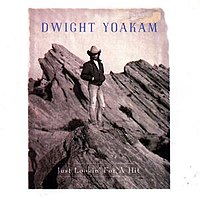
Dwight Yoakam - Just Lookin' For A Hit (1989). An early greatest-hits collection from the man before he really had any greatest hits. But the tracks are Bakersfield-via-Blasters rockabilly/country Americana and make a great argument for Yoakam's place among the great country singers.

And that's it for the Ds! Now in a wildly different mood, here's the introduction to the surprisingly guitar-heavy Es in the form of the mind-melting avant-metal sludgefeasters Earth:
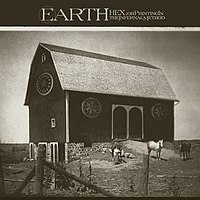
Earth - Earth 2 (1993), Phase 3: Thrones and Dominions (1995), Sunn Amps and Smashed Guitars (1995), Pentastar: In The Style Of Demons (1996), Hex; or Printing In the Infernal Method (2005), Hibernaculum (2007), and The Bees Made Honey In The Lion's Skull (2008). Where ambient music is often taken with the prospect of gentling molding the listener's perceptions, most ambient music is about improvement and relaxation. Earth - taking its name from Black Sabbath's original name - created the particular type of ambient metal known as drone. We've seen the influence in Boris and we'll see it again more directly in Sunn 0))). The Melvins provided some of the background for this music, as did avant-garde minimalists Tony Conrad and Glenn Branca. But here's the deal: Earth makes soundscapes with electric guitars, sometimes bass, and sometimes drums. Earth 2 is the ground zero of drone, with three tracks that stretch over about an hour and fifteen minutes. Phase 3 has far shorter tracks with lots of genuine riffs. Sunn Amps opens with a live 30-minute drone track (which was the entirety of the original release and which, amusingly, quotes liberally from "Free Bird") and is followed by four tracks from a 1990 demo, including one featuring vocals by Earth guitarist Dylan Carlson's old friend and roommate Kurt Cobain. Pentastar, like Phase 3, has a bunch of riffs and shorter songs and, glory be, drums. After Pentastar, Carlson was lost for a number of years to drugs and the irresponsible life. He (and Earth) returned in 2005 with Hex, which made a surprising shift into country-ish instrumentals with a hardcore Morricone feel. And yes, it's still drone-y ambient doom metal at times, but just as often it's utterly beautiful Telecaster-driven Western music, the soundtrack to a movie that doesn't exist (let's say it's Sam Peckinpah's masterful take on Blood Meridian). Hibernaculum is more Western music, with three older tracks redone in Earth's new style and one superlong new track. The Bees Made Honey In The Lion's Skull has a number of shorter (for Earth, at least) tracks, but continues the style of Hex. Excellent stuff, as is...

Earthless - Sonic Prayer (2005), Rhythms From A Cosmic Sky (2007), and Live At Roadburn (2008). Despite the apparent opposition of their names, Earth and Earthless have a few things in common. One is the tendency towards veeeeerrrrrrrrry long instrumentals, although Earthless pushes those extremes even further than Earth. The other is an attempt to make druggy music for druggy people, although they have opposite means to achieve this. Where Earth slows everything down into a spacey haze, Earthless has an aggressive psychedelic rock style that recalls not just the heavy sounds of Black Sabbath, but the trippy/funky riffs of Can, the sheer sonic assault of Acid Mothers Temple, and the sonically adventurous guitar histrionics of Jimi Hendrix. And here's the craziest thing about it: it doesn't just work, but it freaking rocks every second. Who in their right mind would think that a three-piece playing 20 minutes songs at a time could be so damn exciting? Actually, their Live At Roadburn set simply runs a couple of these 20-minute opuses (opi?) together on each side, leading to the whole double album being taken up with two 40-minute tracks. Two 40-minute, utterly exhilarating, breathless even, tracks that rock like crazy and leave you wanting more. Man! Who makes music like this?

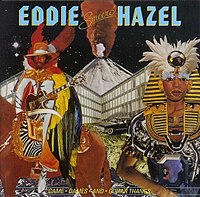
Eddie Hazel - Game Dames and Guitar Thangs (1977). This is the P-Funk guitar genius' only solo album during his lifetime. Although he'd been mostly replaced in the P-Funk lineup by the time this was released (he had behavior problems related to his daily intake of drugs, drugs, and more drugs), he's backed by the full force of the P-Funk crew on this album. There's a cover of "California Dreamin'," a cover of "I Want You (She's So Heavy)" and a whole lotta funk, with vocals primarily by the Brides of Funkenstein and every song featuring Hazel's unique funk/Hendrix/Cosey guitar histrionics. Good lord, yes.

Reading Rainbow Roundup: The Hamlet, Rock Star Babylon, Rum Sodomy & The Lash, Love Is A Mix Tape, and Murder For Profit

Since all I do here now is blabble away about music, I thought I could raise the stakes and natter about books, too! Yeah! I had some down time recently that I could spend reading, and I leapt at the chance to do so. So here's what I read:

The Hamlet - William Faulkner. This is the first of the Snopes trilogy, and although I've read a bunch of Faulkner's novels - many over & over again - this was the first time I had read this one. And it was a blast. Faulkner obviously was having a hell of a great time writing it, stuffing some of his trademark poetry into a sequence about a retarded man's physical love for a cow, for instance, or spending 20 pages delving into the backstory of a minor character just so he could abruptly cut to his murder by shotgun. Although this story was so great that I sort of wish that I had read it many years ago, I'm also happy that I didn't read it until now. It doesn't break the hold that the Compson stories - especially Absalom! Absolam! - have on my imagination and heart, but it adds to my appreciation and awe of Faulkner's work, and it's a great thing when you can find something new to love about an author you've considered among your favorites for nearly 20 years. I'm going to add the next two Snopes novels (that's The Town and The Mansion) to my list, but I'm not going to rush into them. Hell, it took Faulkner 17 years to get back around to the Snopes story, and as I'm entering middle age, I find that I'm not in as much hurry to get there as I used to be, either. Funny how you want to slow down when time is starting to rush by faster, getting more and more precious, but that's life, baby.

Rock Star Babylon - Jon Holmes. From the awe-inspiring to the awful and insipid in one small step. Most of what I know about Holmes is that he's a British radio DJ, and I would guess from this book that he's a lad-mag-loving shock-jock type. See, he takes a great idea: he's going to tell the apocryphal stories of rock music à la Kenneth Anger's Hollywood Babylon, because they're fun and schlocky regardless of their truth. But Holmes is really, really, really fucking lazy. The book reads like he knocked it out in a couple of days with minimal research and the dipshittiest humor that just cracks up his buddies and sycophants. By which I mean every page is packed to the gills with queer panic jokes. Because, I suppose, if one doesn't think that homosexual men and women are inherently hilarious (because they're gay! Get it?) then one must (ha ha ha) be uptight or something. Or maybe - and I'm just throwing this out there - maybe it's just not very funny.

Rum, Sodomy & The Lash (33 1/3) - Jeffrey T. Roesgen. But, see, here's a guy writing about music who has not just a working brain and a work ethic but moreover can write like hell. Jeff Roesgen's 33 1/3 book is about the great Pogues album, yes, but it's also a well-researched work of fiction built around the cover art, a modified version of Théodore Géricault's painting Le Radeau de la Méduse with the band members' faces superimposed over the faces of the men on the raft. Here's the story of the Medusa, for your reading pleasure. Roesgen tells the story from the point of view of a musician - Jem from the Pogues, if I'm reading it correctly - who has sailed with the Medusa with the rest of his band (who are, indeed, the Pogues) and who ends up on the fateful raft after the captain stranded the vessel in open seas. Along the way, Roesgen pauses his narrative to talk about the songs on the album. I found the novella quite affecting and the analysis enlightening. I've read some complaints about the use of fiction as a way of discussing music, but I clearly don't give a shit. And neither does Roesgen, and thank god for it.

Love Is A Mix Tape - Rob Sheffield. Sheffield's day job is reviewing music and other aspects of pop culture for Rolling Stone, but this memoir dates to his life before his writing success, when he was a grad student at the University of Virginia in Charlottesville. He fell in love with a girl - a fellow DJ and aspiring writer - and then he married her. They lived happily for a few years, and then she suddenly passed away from a pulmonary embolism one day while they were at home together. Christ, the horror. Sheffield frames his story around a series of mix tapes that he made or she made for him, which incidentally (and poignantly) captures how important mix tapes were us music geeks in the pre-CD days. The girl he loved: I should say something about her, because he writes about her so beautifully and clearly. But it's hard to do so, because that's really what the book is about, introducing people who never got the chance to meet her to the girl he loved. I'll say that her niece, who she unfortunately never knew, is my son's best friend at their preschool. And after reading this story, I can see a lot of the aunt in the niece, which is also a little beautiful and poignant. I told her mother, who clearly misses her sister, that I had read the book, and she sent me this, an article that she called Love Is A Virgin, which further illuminates how unfortunate we all are that her time was so short. I read this book just after a funeral, my wife's beloved grandmother, and I also couldn't help but feel for my wife's grandfather, a widower now like Sheffield, and how horrible it is to survive, to suddenly have a person-shaped hole in your life.

Murder For Profit - William Bolitho. This one was a recommendation from Leonard Pierce, and bless him for it. This is a fictionally-written nonfiction take on several serial killers in history, written in 1926 by a guy whose real name might have been Charles or William Ryall (the web is unclear on the matter), and GODDAMN could this guy write. The whole book can be taken as an attempt to profile a serial killer in the early days of psychology with the variable results you may expect, but Bolitho's wit and style carry him through the stories. If you have the patience to read it online, here's one of the chapters, a section on George Joseph Smith, who murdered a number of women in 19-teens England in a money-making scheme that recalled the gritty/horrific movie The Honeymoon Killers. Consider some of Bolitho's lines here:

  • "Truth loves economy; there is no need to make her a fool, or him a genius."

  • "It is an act, a corporal violence, like the thong of a whip laid across her face, the apparently senseless, but by no means causeless, worrying of a sheep by a vicious dog. The passivity, the meekness of this educated woman had aroused some other nameless devil in him besides his biting fear-born avarice. Other dupes were to him only jumping figures in a cash-book. This most unhappy woman was to him flesh and blood. She had landed on the island of his egotism; he was afraid he was not alone."

  • "The way of a murderer and a boa-constrictor are opposite. Where the one sweetens with his saliva, the other must carefully contrive to hate." [This is my favorite.]

  • "At thirty-eight a woman's affairs are her own concern, and seldom easy to tell."
It's out of print, but there's used copies to be had on the cheap from Amazon. Avail yourselves!

My photo
Cary, NC, United States
reachable at firstname lastname (all run together) at gmail dot com

About This Blog

From Here To Obscurity, founded ca. 2003, population 1. The management wishes to emphasize that no promises vis-a-vis your entertainment have been guaranteed and for all intents and purposes, intimations of enlightenment fall under the legal definition of entertainment. No refunds shall be given nor will requests be honored. Although some may ask, we have no intention of beginning again.

  © Blogger templates Brooklyn by Ourblogtemplates.com 2008

Back to TOP